
August is the month that tells you the truth about a garden. Everything planted in March looks convincing in May. By the second week of August, when the ground has been hot for weeks and the nights barely cool, the difference between a garden that was watered and a garden that was irrigated becomes obvious from the terrace.
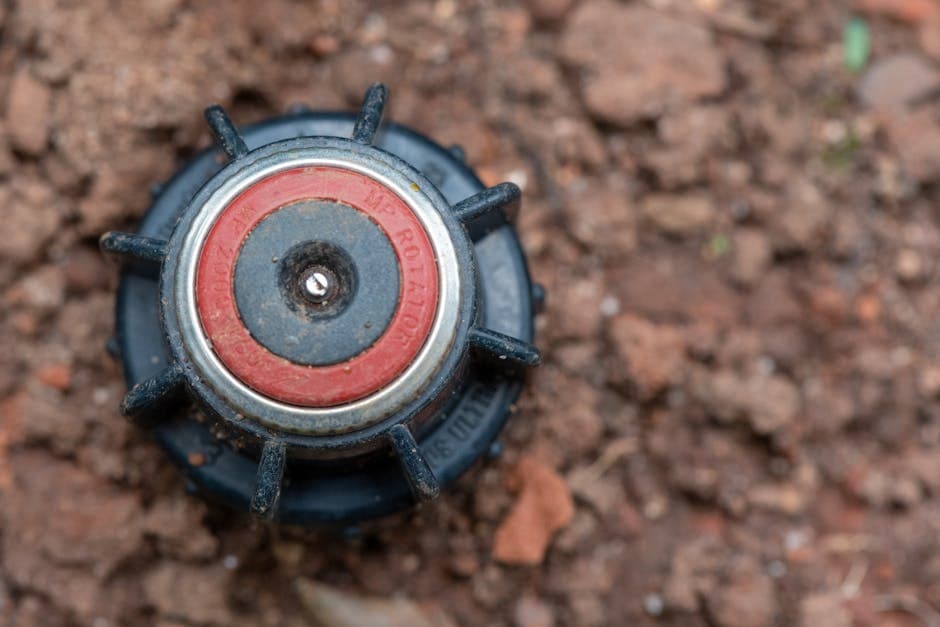
Drip irrigation is the quiet part of that difference. It is not decorative, most of it is buried or hidden under mulch, and when it is done properly nobody notices it at all. That is rather the point of how we work: the result should look effortless, and the engineering that makes it effortless should stay out of sight.
What drip actually changes
A sprinkler throws water into hot, moving air and across leaves, paving and gravel. A drip line puts water at the base of a plant, slowly, where the roots are. Slow delivery matters more than people expect, because water applied faster than the soil can absorb it runs sideways across a dry surface and away from the root zone rather than down into it.
The other change is control. With individual emitters you can give an olive tree a long, infrequent soak and give a bed of lavender something much lighter, on the same day, from the same controller. Watering a mixed Mediterranean border with one spray pattern means somebody is being over watered and somebody is being under watered, and in August both of those are expensive mistakes in plant terms.
If you want the technical background rather than our version of it, the standard reference for how plant water requirements are calculated from climate data is FAO Irrigation and Drainage Paper No. 56, Crop Evapotranspiration, which is published in full at fao.org. It is the framework behind the simple observation every gardener in Cyprus already knows: the same plant needs far more water in August than in April.
The water rules come first, not last
Before any schedule is set, the rules that apply to your property need checking. Cyprus is not one irrigation situation. Larnaca is the driest of the areas we look after, at roughly 330 mm of rainfall a year, with irrigation restrictions in force for 2026 and slightly saline groundwater on plots near the salt lake. Limassol presents a different set of problems: humidity, roof terraces and container planting, and palm health to keep an eye on.
We design around restrictions rather than around them. No schedule we set is intended to work past a limit that applies to your property, and current rules and any local notices should be confirmed with the Water Development Department and your local water authority, whose information sits under moa.gov.cy. The same applies to rainwater harvesting and boreholes. Both are asked about constantly and both are subject to permission in Cyprus, so they belong in a conversation about consents before they belong in a conversation about tanks and pumps.
Where restrictions are tight, drip is not a way of getting more water onto a garden. It is a way of getting more garden out of the water you are permitted to use, which is a different and more useful thing.
Grouping plants so the system can do its job
A drip system can only be as sensible as the planting plan behind it. The practical move is to group plants by how thirsty they are, so that each zone can run on its own schedule rather than on a compromise.
The species we lean on in Cyprus gardens are chosen partly for this reason. Bougainvillea, oleander, olive, lavender and jasmine all cope with drought once they are established, and they tolerate the deep and infrequent watering pattern that suits drip lines. Establishment is the exception. A newly planted specimen has a root ball sitting in a hole surrounded by dry soil, and it needs closer attention in its first summer than the same plant will need in its third. Planting in autumn rather than in high summer, where the project timetable allows it, removes a great deal of that stress.
Mulch belongs in this section too. A layer of mulch over drip line slows evaporation from the soil surface and keeps the emitters out of direct sun, which is worth more in August than any extra minute on the timer.
Containers and roof terraces
Containers are a separate problem, particularly on the roof terraces that are common in Limassol. A pot in full sun heats from every side, holds a limited volume of compost and can go from adequately moist to bone dry within a single day. Hand watering a terrace of twenty pots reliably, every day, in August, is a commitment few owners actually keep once the holiday starts.
Micro drip on a dedicated zone, with its own shorter and more frequent schedule, is usually the answer. Pots want a different rhythm from beds, and putting them on the same valve as the garden is one of the most common reasons a terrace looks tired in late summer while the borders look fine.
The August routine
A drip system is low maintenance rather than no maintenance. Through the hottest months the checks that matter are simple and they matter every year:
- Filters. Cyprus water carries sediment and a blocked filter starves the whole line.
- Emitters. Look for dry patches under a plant that should be wet, and for pooling where an emitter has failed open.
- Pressure. Long runs and level changes on sloping villa plots can leave the far end of a line delivering noticeably less than the near end.
- Timing. Running in the early morning loses less water to evaporation than running at midday, and gives foliage time to dry.
- Coverage as plants grow. A shrub that has doubled in size has a root zone that has moved outward, and the emitter that suited it two years ago may now be watering the wrong place.
This is exactly the work our maintenance teams in Limassol and Larnaca carry out on a regular visit, alongside pruning and feeding. If you would rather keep the checks yourself, the list above is the one to follow.
Retrofitting an existing garden
Most of the gardens we are called to already exist. Retrofitting drip into established planting is usually less disruptive than owners fear, because the lines follow the beds rather than cutting across them and much of the work is surface level under mulch.
As a rough guide to timescales, a terrace or a small garden is typically a job of one to two weeks, while a larger villa project that involves hardscaping, irrigation and mature planting together usually runs three to six weeks. Those are typical spans rather than promises. Every plot has its own access, its own soil and its own water supply, and the honest answer for your property comes after we have stood on it.
One more tool worth mentioning: our Plant AI 2.0 will identify a plant from a photograph and return care guidance written for the Cyprus climate, which is useful when you have inherited a garden and do not know what is in it. Treat what it tells you as an indication to work from rather than a verdict, and let someone look at the plant itself before you act on anything serious.
Where to start
The brothers behind Green Planet Gardening have been building and maintaining gardens in Cyprus for over a decade, from our base in Paphos and across the island, and we deliberately keep the number of live projects limited so that each garden gets proper attention. If August has exposed something in your garden that you would rather not repeat next year, autumn is the right moment to deal with it.
You can see the full range of what we do on our services page, and the villa work in particular on our luxury villa gardens page. To talk it through, call +357 99 245 332. The first consultation is free and carries no obligation, we respond within 24 hours, and any proposal is prepared for your specific garden after we have seen it.
Green Planet Gardening
Luxury garden design, construction, and maintenance across Cyprus. Founded by the Knodaritis brothers with over a decade of Mediterranean landscaping excellence.
Book a free consultation →Continue Reading
 Seasonal Care
 Seasonal Care
 Seasonal Care