
Konnos Bay sits on the south east coast of Cyprus, in the Cape Greco area between Protaras and Ayia Napa. It is one of the most photographed stretches of coastline on the island, and one of the least forgiving places to plant a garden. The light is hard, the wind carries salt, and the soil on many plots is shallow limestone rubble rather than anything a nursery label would call loam. A planting list that performs inland can look tired within a single season on a headland plot.
This article is about what actually holds up in that position, and about the preparation that decides whether a coastal planting scheme looks settled in its second summer.
Read the wild vegetation before you choose a plant list
Cape Greco is a National Forest Park managed by the Cyprus Department of Forests, and the wider area is included in the European Natura 2000 network, which you can check yourself in the Natura 2000 Network Viewer published by the European Environment Agency. That matters for two reasons.
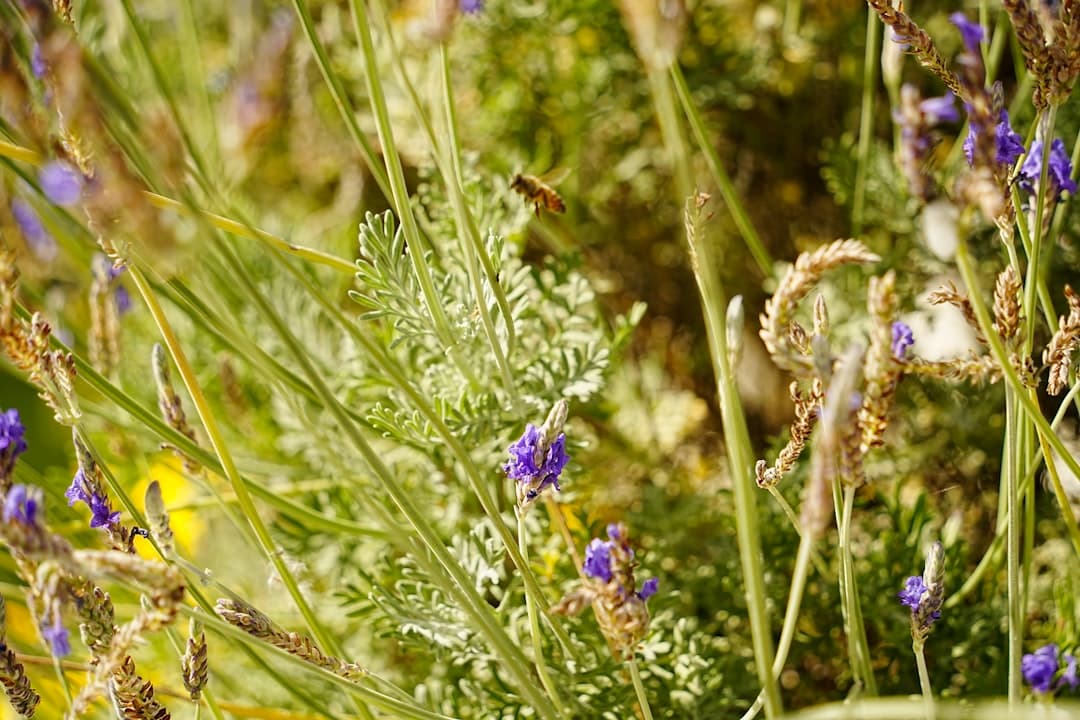
The first is practical. The shrubs that survive unirrigated on those cliffs are a free briefing on the site: Phoenician juniper, mastic shrub, Mediterranean thyme, and the sea daffodil that appears in the sand pockets. Low, dense, small leaved, grey or leathery foliage. Nothing tall, nothing soft, nothing broad leaved. A garden that borrows that silhouette reads as part of the coast instead of fighting it.
The second is legal. Protected areas are not plant sources. Material for a garden comes from nursery stock, and on our projects plants and materials ordered through the shop section of the site are invoiced with every order, so there is a clear record of what was supplied and planted.
Salt, wind and thin soil are the three real limits
Salt laden wind is the factor most new owners underestimate. The Royal Horticultural Society sets out the basic mechanism in its coastal gardens advice: salt spray scorches foliage and persistent wind increases water loss, so shelter and plant selection carry more weight than feeding or watering. On a Konnos Bay plot that translates into a layered approach. A tough outer line of planting or a permeable screen takes the first hit, and the more ornamental material sits behind it, in courtyards, in the lee of walls, or on the inland side of the house.
Thin soil over rock is the second limit. Where there is no depth to work with, raised beds, planting pockets with properly built up growing medium, and generous gravel mulch do more for establishment than any irrigation schedule. The third limit is reflected heat from pale stone, pool copings and rendered walls, which pushes the microclimate around a terrace well beyond what the surrounding ground experiences.
The plants we work with, and where they go
Our own specialisation is in drought tolerant Mediterranean planting, and the list we name on our homepage is bougainvillea, oleander, olive, lavender and jasmine. On a coastal plot, placement is what makes that list work.
Olive gives structure and is the obvious anchor for an exposed garden, kept low and open rather than pushed for height. Oleander takes heat and wind and makes an honest boundary mass. Bougainvillea wants a wall and a reflected heat position, which a coastal villa supplies without effort. Lavender is a drainage question before it is a sun question, so it belongs on raised, gritty ground rather than in a flat bed that holds winter water. Jasmine earns its place in a sheltered courtyard or an entrance where the scent is held rather than blown away.
Around those, grey leaved and aromatic infill keeps the scheme coherent: rosemary, thyme, santolina and similar low mounds that echo the wild garigue a few hundred metres away.
Water is the part that is regulated, not improvised
We publish one hard water figure on our site, for Larnaca: around 330 mm of rainfall a year, irrigation restrictions in 2026, and slightly saline groundwater on plots near the salt lake. We do not publish a comparable figure for the south east coast, so we will not invent one here. What transfers is the planning logic. A coastal garden is designed to the water that is lawfully available, not to the water a scheme would ideally like.
Two points are worth checking before any design is finalised. Rainwater harvesting and boreholes in Cyprus are permit dependent, and the Water Development Department is the authority to consult rather than a contractor's assurance. Local restrictions change, and a planting plan that only works under unrestricted irrigation is a liability. We design on the assumption that restrictions can tighten, which is why hydrozoning, mulch depth and plant choice carry the load instead of flow rates.
Palms on the coast need a regulatory check first
Palms are part of the visual language buyers expect near a bay, and they come with a condition attached. The red palm weevil is one of the pressures we name for Limassol, alongside humidity and roof terraces, and it is a regulated quarantine pest under the EU plant health rules in Regulation (EU) 2016/2031, with its distribution documented in the EPPO Global Database.
That is why you will not find a treatment recipe here. Suspected infestation is a matter for the Cyprus Department of Agriculture, including any reporting duty that applies, and plant protection products may only be used where they are authorised in Cyprus and, in some cases, applied by a qualified operator. What we can do at design stage is advise on species choice, on sourcing, and on inspection habits that catch a problem while it is still small.
How a coastal project actually runs
We work to typical spans rather than fixed promises. A terrace or small garden usually takes one to two weeks. A larger villa project with hardscaping, irrigation and mature planting usually takes three to six weeks. Those are the spans we publish, and a firm schedule only exists once a project has been surveyed and quoted.
We also run deliberately few projects at the same time. Green Planet Gardening was founded by the Knodaritis brothers and has been working in Cyprus for over a decade, with three brothers covering client contact and planning, new build landscaping, and maintenance respectively. Our base is in Paphos and we work Cyprus wide, including Limassol, Larnaca, Nicosia and the surrounding areas, with our own maintenance service operating in Limassol and Larnaca. For a plot in the far south east, that distinction is worth raising early, so design, build and any ongoing care are scheduled honestly from the start. You can see how we structure the work on our services and luxury villa gardens pages, and the regions we cover on our service areas section.
Using our AI tools without mistaking them for a survey
Plant AI 2.0 identifies a plant from a photograph and returns the name, the family and a match score, with care notes written for the Cyprus climate. The example on our site is a bougainvillea at a 94 per cent match. Gaia answers plant questions, produces design mockups from photos, and books appointments.
Both are useful for orientation and neither replaces someone standing on your plot. An identification or a care note is an unbinding assessment, not a diagnosis, and a mockup produced by Gaia is an AI generated image rather than a project we have built. On an exposed coastal site in particular, soil depth, prevailing wind and the salt load on each boundary are things we measure on site.
Starting from an empty plot
Most coastal gardens we are called to begin as bare ground after a purchase, sometimes with builders' rubble still in the topsoil. That is a workable starting point, and often a better one than inheriting a scheme that has to be unpicked.
The first conversation is free and carries no obligation, and we reply within 24 hours. You can reach us on +357 99 245 332 if you would rather talk it through than type it out, and if your plot is anywhere along the southern coast we will tell you plainly what the site will carry and what it will not.
Green Planet Gardening
Luxury garden design, construction, and maintenance across Cyprus. Founded by the Knodaritis brothers with over a decade of Mediterranean landscaping excellence.
Book a free consultation →Continue Reading
 Garden Design
 Garden Design
 Garden Design