A wall light is the quietest fitting in an outdoor scheme and the one most often bought last, usually in a hurry, usually one at a time. In product catalogues it appears under the word sconce: a fitting fixed flat to a vertical surface, throwing its light up, down or both. On a Cyprus villa that single fitting type has to serve three completely different surfaces, and each of them asks for something different.
The facade is architecture. The steps are safety. The garden walls are atmosphere. Treat them as one decision and the result looks like a lighting showroom. Treat them as three unrelated decisions and the garden looks like it was wired by three different people. What follows is how we think about the problem, surface by surface.
Start with the surface, not the fitting
A sconce does not light a garden. It lights the wall it is bolted to, and the wall does the rest. That is the whole trick. Rough stone takes a grazing beam and returns texture. Smooth white render takes the same beam and returns a hard bright patch with a visible scallop edge. Fair faced concrete sits somewhere in between and tends to show every trowel mark once light runs across it.
So before choosing a fitting, look at what the wall is made of and how close the light will sit to it. A narrow downward beam mounted tight against render will read as a bright triangle. The same beam set further out, or softened by a diffuser, washes the surface instead of marking it. On stone boundary walls we often want the opposite effect and deliberately keep the fitting close, because the shadow is the point.
Facade: fewer fittings, mounted higher
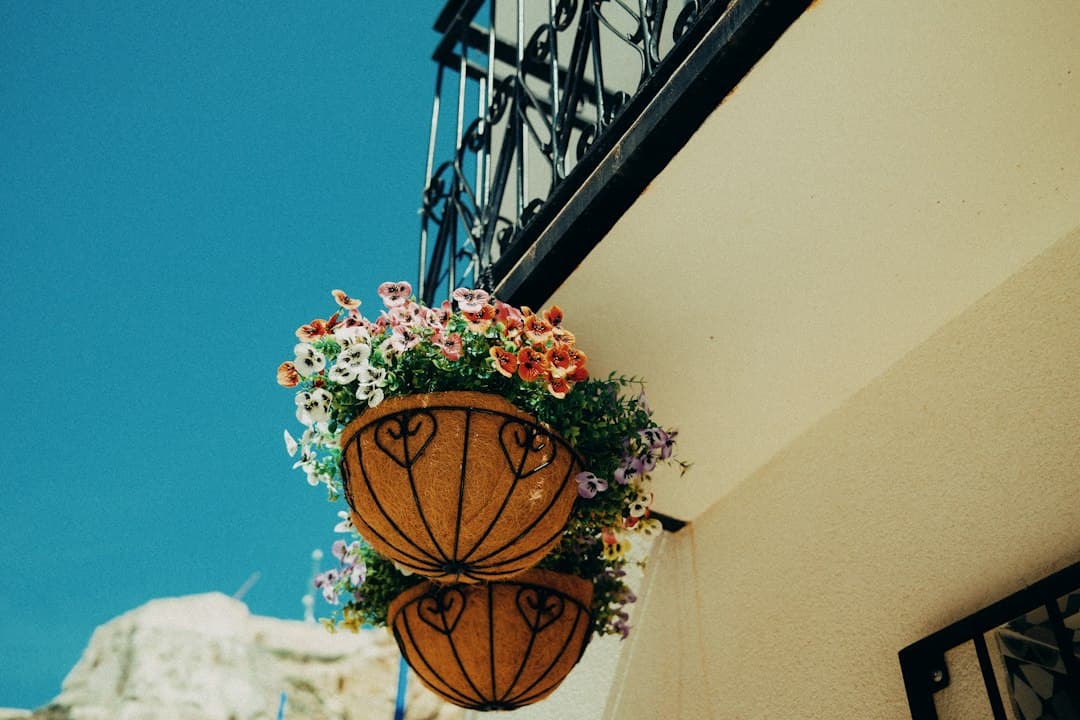
Entrance and facade sconces carry the identity of the house, which is exactly why restraint pays. A common starting point in facade lighting practice is roughly 2.0 to 2.2 m above the finished level for an entrance fitting, which keeps the light source above normal eye line and the brightest part of the beam off faces. Above that height a sconce starts to behave like a floodlight and spills into windows and over boundary walls.
Symmetry matters more here than anywhere else. Two fittings flanking a door, or an even rhythm along an arcade, will survive years of looking at it. A single off centre lantern rarely does. DarkSky International sets out a useful discipline in its Five Principles for Responsible Outdoor Lighting: light only where it is needed, shield the source, keep levels no higher than necessary and keep colour warm. On a facade that translates into shielded, downward biased fittings rather than bare upward glare.
Steps: the light belongs below the knee
Steps are the one place where lighting stops being decorative. The purpose is to make the nosing of each tread legible without dazzling the person using it, and that means low mounting and tight control. A sconce recessed or surface fixed into the side wall of a stair, kept well below waist height, puts light onto the tread and leaves the eye adapted to the dark garden beyond.
The European standard EN 12464-2 covers lighting of outdoor work places and sets out the principles that sit behind this: adequate illuminance on the task area, limitation of glare and attention to the uniformity of the lit surface. A private garden is not a work place, but the logic transfers directly. Even light on every tread beats bright light on some treads, because the dark steps between two bright ones are the ones people misjudge.
One practical note. Step fittings are the first thing a chair leg, a hose or a suitcase will hit. Choose a body that can take an impact and a lens that can be cleaned without a special tool.
Garden walls: the layer that makes the rest work
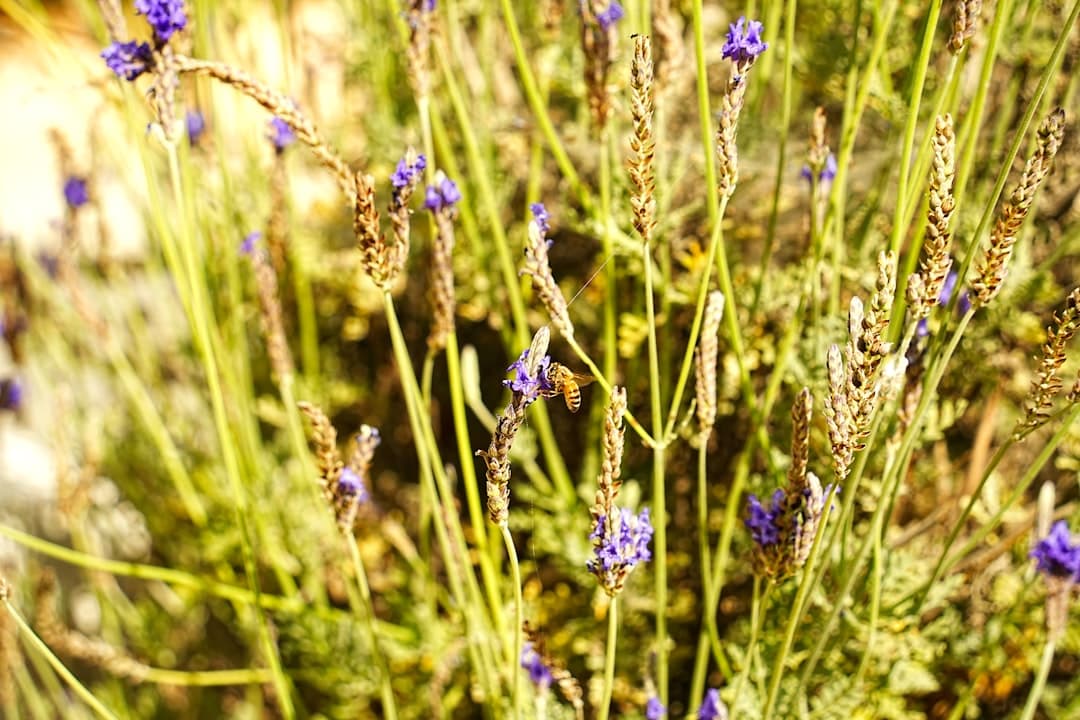
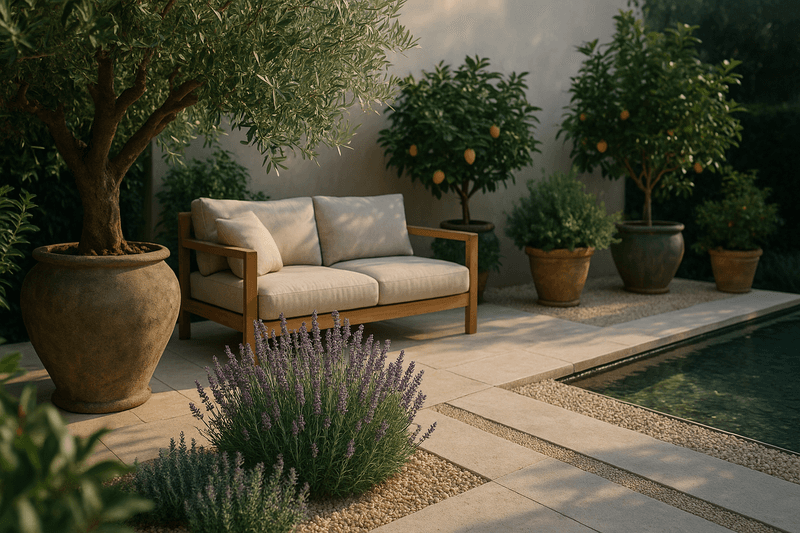
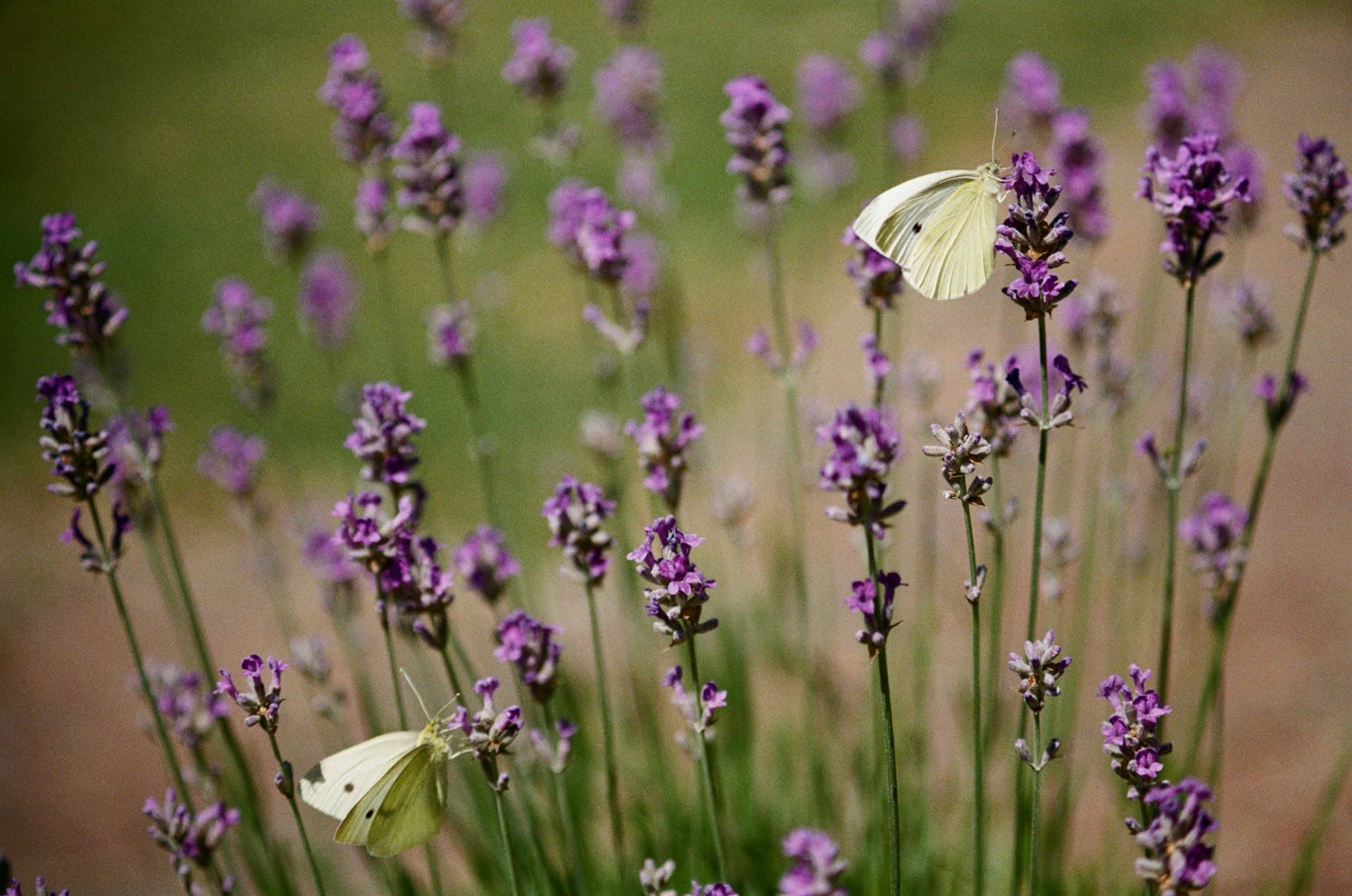
Boundary and retaining walls are where wall lighting earns its place in a planted garden. A low grazing wash along a rendered retaining wall turns a flat surface into a background, and plants read against it instead of disappearing into black. We specialise in drought tolerant Mediterranean planting, bougainvillea, oleander, olive, lavender and jasmine, as set out in the FAQ on our homepage, and each of those behaves differently under light from the side. Olive foliage catches a grazing beam on its silver underside. Bougainvillea against a lit wall becomes a silhouette with colour in it. Lavender, low and grey, prefers light falling from slightly above rather than straight across.
This is also where restraint protects the night. A garden wall lit at the same intensity as the house entrance flattens the whole plot. Keep the walls dimmer than the facade and the garden gains depth for nothing.
IP ratings, salt and the Cyprus coast
The two digit IP code on a fitting is defined in IEC 60529. The first digit covers protection against solid objects, the second against water: IP44 means protection against splashing water, IP65 means protection against water jets and dust tight, IP67 means protection against temporary immersion. The code says nothing at all about corrosion, which is the part that matters most here.
That distinction is not academic on this island. Our homepage FAQ records what we see across the regions we cover: Larnaca is the driest area we work in, with around 330 mm of rainfall a year, irrigation restrictions in 2026 and slightly saline groundwater on plots near the salt lake, while Limassol brings humidity, roof terraces and the red palm weevil. Salt laden air and humidity attack fasteners, gaskets and painted finishes long before they trouble the electronics. On exposed coastal plots we look hard at the fixings and the housing material, and we expect any fitting on a seafront wall to be inspected as part of regular maintenance rather than fitted and forgotten.
Energy performance is easier to check. Light sources placed on the EU market fall under Regulation (EU) 2019/2020, so an integrated LED fitting sold here carries declared data you can read before you buy, including efficacy and lifetime figures.
Wire it before the wall is finished
The cheapest moment to run a cable is before anything is rendered, paved or planted. Chases cut into a finished wall are visible for the life of the house. Where a scheme is designed alongthe hardscaping, the conduit, the driver locations and the switching zones get decided together with the steps and the irrigation runs.
Timing helps here. As our FAQ explains, a terrace or small garden usually takes 1 to 2 weeks, while a larger villa project with hardscaping, irrigation and mature planting typically takes 3 to 6 weeks. Lighting conduit costs almost nothing inside that window and a great deal afterwards. For design teams, our page for architects sets out how the technical and creative consulting side of the work fits into a drawing set.
How we approach a scheme
Green Planet Gardening was founded by the Knodaritis brothers and has worked in Cyprus landscaping for over a decade, with three brothers behind the business, 5 star client reviews and projects Cyprus wide, as stated on our homepage. We are based in Paphos and work across the island, including Limassol, Larnaca, Nicosia and the surrounding areas, with our own maintenance service in Limassol and Larnaca. We keep a deliberately limited number of projects running at once so each garden gets full attention, and our work sits in three blocks: luxury garden design, professional maintenance and tailored consulting for architects.
On the website, Plant AI 2.0 identifies a plant from a photograph and returns its name, family and a match score, with care notes written for the Cyprus climate. The example shown on our homepage is a bougainvillea at a 94 % match. It is a useful first read on what is already growing against a wall you want to light, and the output should be treated as a non binding assessment rather than a diagnosis. Design visuals produced by our AI assistant Gaia are generated images, not photographs of completed projects.
If you are standing in front of a bare facade, a flight of unlit steps and a long garden wall, the useful first step is a conversation about the surfaces rather than the fittings. Our homepage offers a free consultation with no obligation and a response within 24 hours, and you can reach us on +357 99 245 332. Bring photographs taken at dusk if you have them, because the darkness in a photograph tells us more than the daylight does.
Green Planet Gardening
Luxury garden design, construction, and maintenance across Cyprus. Founded by the Knodaritis brothers with over a decade of Mediterranean landscaping excellence.
Book a free consultation →