A lawn sprinkler is the part of the system everyone sees, so it is usually the part people ask about first. It is also the last thing that should be decided. By the time a head is chosen, the real work has already happened: the water source has been understood, the flow has been measured, the planting has been grouped and the layout has been drawn around the shape of the garden rather than around a catalogue.
We are a family business of three brothers, working from Paphos across Cyprus, and irrigation sits at the centre of almost every project we take on. Over more than a decade of working only on this island, the pattern repeats: gardens rarely fail because the plants were wrong. They fail because the water arrived in the wrong amount, at the wrong hour, in the wrong place.
Start with the source, not the spray
Every plan begins with one question: where is the water coming from, and under what conditions may it be used? Mains supply, a storage tank, a borehole and harvested rainwater all behave differently and are all treated differently in law. In Cyprus, boreholes and rainwater harvesting systems are subject to permitting and to the rules of the Water Development Department, so the honest answer on a new property is often that the source has to be confirmed in writing before a single pipe is specified. We design to the supply that is actually permitted, and we do not design around restrictions.
This matters most in Larnaca. It is the driest of the regions we serve, with roughly 330 mm of rainfall in a year, irrigation restrictions in force for 2026, and slightly saline groundwater on plots near the salt lake (Green Planet Gardening, homepage FAQ). A layout that works beautifully in a sheltered Paphos courtyard can be the wrong plan entirely fifty kilometres east.
Measure flow and pressure before anything is drawn
Two numbers decide the shape of the whole system. The first is available flow, usually expressed in litres per minute or cubic metres per hour. The second is dynamic pressure, measured while water is running, not while the tap is closed. Static pressure flatters every system; dynamic pressure tells the truth.
From those two numbers comes the zone count. A lawn sprinkler head has a fixed appetite, and the total appetite of the heads on one valve cannot exceed what the supply can deliver without losing pressure at the far end. Under-pressured heads do not simply throw a shorter distance. They break the spray pattern into coarse droplets, water the first two metres heavily and leave a dry ring beyond. That ring is what people later describe as a disease problem or a soil problem.
One zone per planting type, not one zone per garden
Hydrozoning is the single most useful idea in Mediterranean irrigation design. Lawn, shrub beds, mature trees, container planting and roof terrace pots have genuinely different water needs, different root depths and different seasonal curves. Putting them on one valve means something is over-watered so that something else survives.
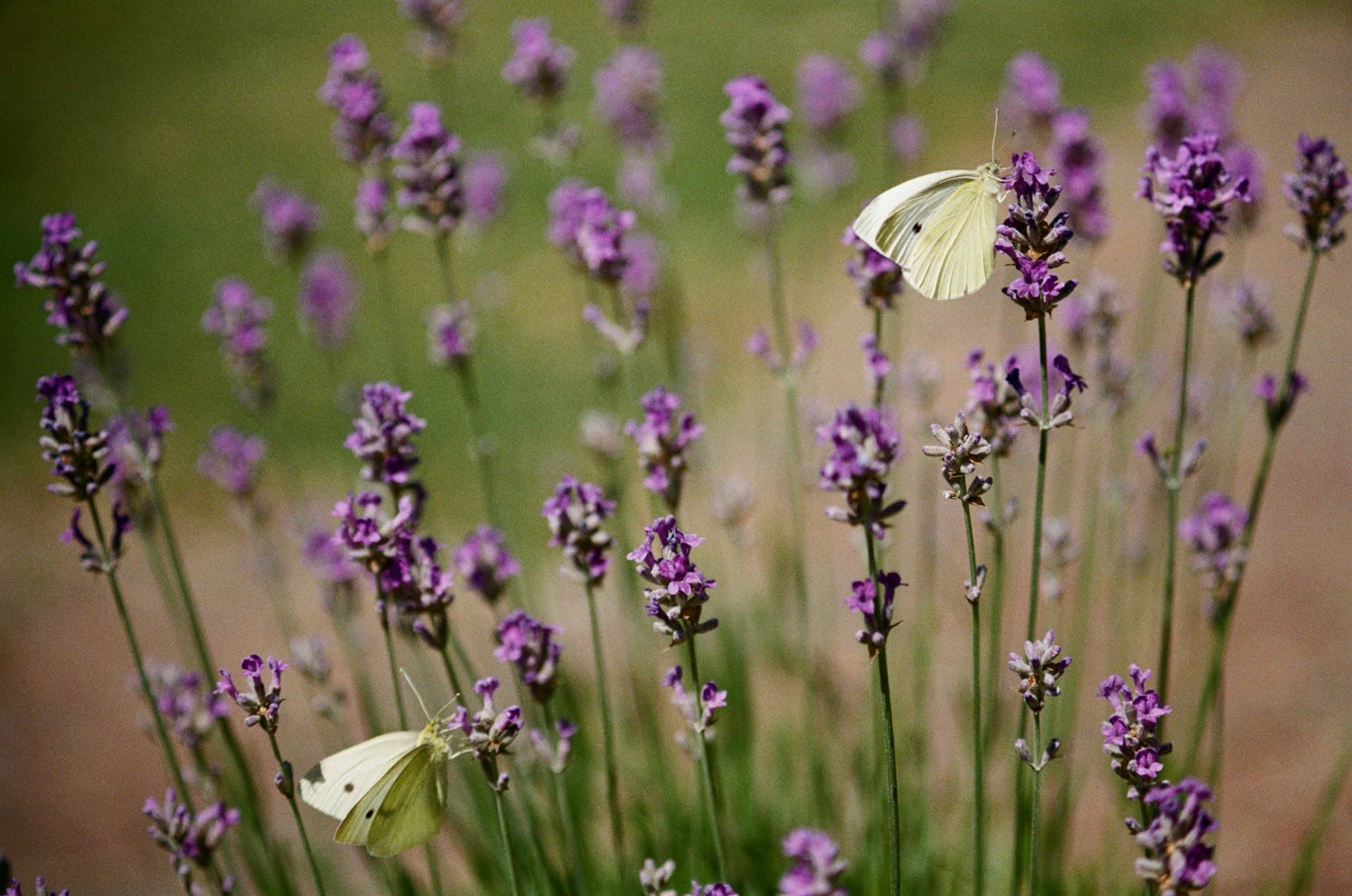
In practice that gives us separate circuits for turf, drip lines for beds, dedicated emitters for specimen trees and a hand-watered or separately valved group for containers. We specialise in drought-tolerant Mediterranean planting, including bougainvillea, oleander, olive, lavender and jasmine (Green Planet Gardening, homepage FAQ), and the point of such planting is partly that it can sit on a much leaner circuit than turf once it is established. Mixing the two removes that advantage.
What actually matters when choosing lawn heads
For turf, the questions are narrow and technical. Rotors or fixed spray nozzles, depending on the size and shape of the area. Matched precipitation rate nozzles, so that a quarter-circle and a full-circle head put down a comparable depth per hour. Head-to-head spacing, so that the edge of one arc reaches the next head rather than stopping halfway. Pressure-regulated bodies, which hold a steady outlet pressure and keep the droplet size coarse enough to resist drift. Check valves on sloped ground, so that the lowest head is not draining the lateral every time the zone shuts off.
Wind is a design input in Cyprus, not an afterthought. Fine mist loses a meaningful share of applied water before it reaches the soil, which is one reason the irrigation literature treats application efficiency and reference evapotranspiration as separate calculations (see FAO Irrigation and Drainage Paper 56). Coarser droplets, lower trajectory nozzles on exposed ground and early morning scheduling all reduce that loss.
Regional differences we design around
Our clients are spread across the island, with maintenance rounds of our own running in Limassol and Larnaca (Green Planet Gardening, homepage FAQ), and the brief changes with the postcode.
In Limassol the issues are humidity, roof terraces and the red palm weevil (Green Planet Gardening, homepage FAQ). High humidity means overhead spray in dense planting stays wet longer, so beds are better served by drip at soil level. Roof terraces bring weight limits, drainage falls, membrane protection and pots that dry in hours rather than days, which is a case for small-diameter drip with individual emitters rather than anything resembling a lawn sprinkler. The red palm weevil is an EU regulated quarantine pest, and treatment in Cyprus is governed by official rules including reporting obligations, so palms near an irrigation design are a matter for the competent authority rather than a watering tweak.
In Larnaca, salinity and restriction drive the design. Slightly saline water pushes us towards planting that tolerates it, towards soil-level delivery that keeps salts off foliage and towards occasional deeper cycles that move salts below the root zone, within whatever the current rules permit. Inland around Nicosia, the summer heat load and the clay soils argue for cycle-and-soak scheduling, where a zone runs in short bursts with pauses, so that water infiltrates instead of running off.
Controllers, sensors and the limits of automation
A controller does not save water. A controller executes a schedule. What saves water is a schedule that follows the season, a rain sensor or soil moisture sensor that interrupts a pointless cycle, and someone checking the system often enough to notice a cracked nozzle. Seasonal adjustment should be revisited several times a year, because reference evapotranspiration in a Mediterranean climate changes far more between April and July than most default programmes assume.
We also like a flow sensor or a master valve on larger villa and resort systems, because the most expensive irrigation fault is the one that runs at three in the morning for a fortnight while nobody is on the property.
Timescales, honestly stated
Irrigation is usually installed alongside hardscaping, before planting and before any turf goes down, which is why it belongs in the programme from the first drawing. As a typical range, a terrace or small garden tends to take one to two weeks, while a larger villa project involving hardscaping, irrigation and mature planting usually takes three to six weeks (Green Planet Gardening, homepage FAQ). Those are indicative spans rather than committed dates. A firm programme follows a site visit and a written proposal.
Where our own tools fit in
On our site, Plant AI 2.0 identifies a plant from a photograph and returns a name, family and match score along with care guidance written for the Cyprus climate, and our assistant Gaia answers planting questions and can produce design mock-ups from photographs. Both are useful for orientation, and both should be read as non-binding estimates rather than as a site survey or a diagnosis. Any mock-up Gaia generates is an AI-made image, not a photograph of completed work. Soil, exposure, supply pressure and local rules still need a person on the ground.
How to begin
If you have a new garden, an ageing system that waters unevenly, or a property where the water source has not yet been clarified, the sensible first step is a conversation and a look at the site. Our first consultation is free and without obligation, and we aim to respond within 24 hours. You can reach us on +357 99 245 332, or read more about our design, maintenance and architect consulting work on our services page and our luxury villa gardens page. We work with a deliberately limited number of projects at a time, because a watering plan is only as good as the attention paid to it.
Green Planet Gardening
Luxury garden design, construction, and maintenance across Cyprus. Founded by the Knodaritis brothers with over a decade of Mediterranean landscaping excellence.
Book a free consultation →