
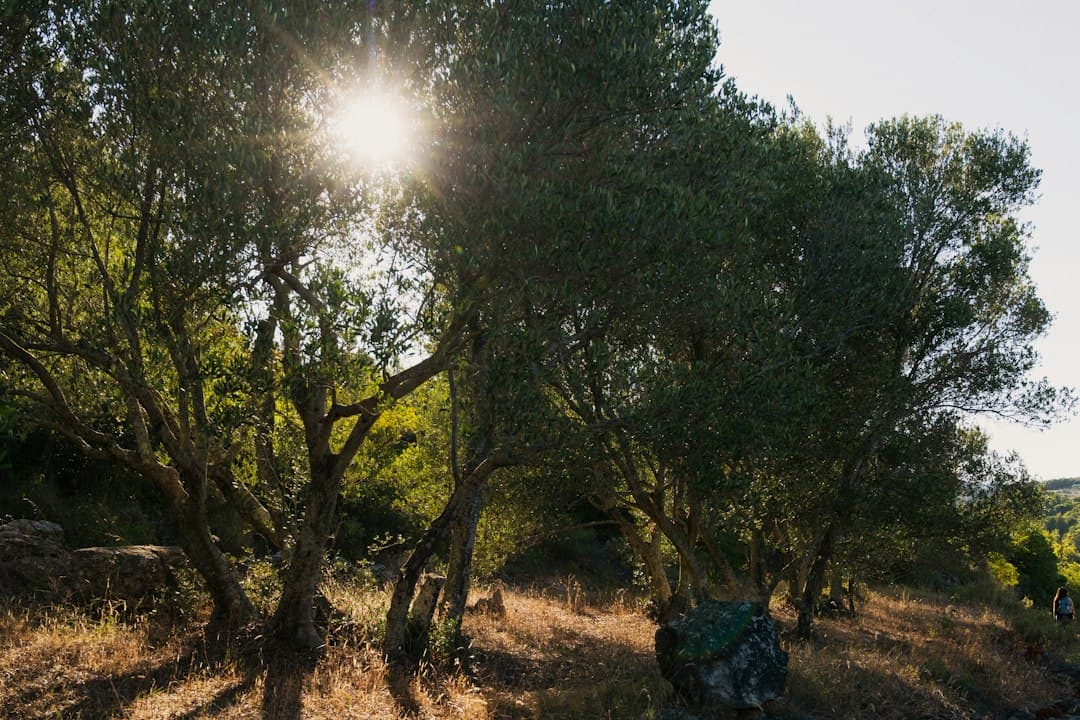
Few images capture the soul of Cyprus quite like a grove of silver-green olive trees catching the afternoon light, their gnarled trunks telling stories that span generations. If you're wondering how to plant an olive grove in Cyprus, you're joining a tradition stretching back over 5,000 years on this island — but doing it well in your own garden requires more than romantic notions. It demands the right spacing, the right varieties, and crucially, the right timing.
Quick answer: The best time to plant an olive grove in Cyprus is during autumn, from late October through November, when soil temperatures remain warm (18-22°C) but the punishing summer heat has passed. For a traditional grove, space trees 7-8 metres apart in all directions; for intensive or ornamental small gardens, 4-5 metre spacing works well with compact varieties. Choose locally-adapted cultivars like Koroneiki, Ladoelia, or the native Cypriot variety for the best yields and resilience.
Whether you're dreaming of a few productive trees to press your own oil or a genuine mini-grove that will outlive you, this guide covers everything you need to plant with confidence this autumn.
Why Autumn Is the Best Time to Plant Olive Trees in Cyprus
Cyprus gardeners often default to spring planting out of habit, but olive trees establish far better when planted in autumn — and the science behind this is straightforward.
Soil Temperature and Root Establishment
Olive roots grow most actively when soil temperatures sit between 15°C and 25°C. In Cyprus, autumn soil retains the accumulated warmth of summer while air temperatures cool, creating an ideal window for root development without the stress of transpiration loss. Plant in October or November, and your olive trees will spend the mild winter months quietly building a strong root system before the demanding heat of their first Cypriot summer arrives.
Avoiding Summer Transplant Shock
A young olive tree planted in spring faces an uphill battle: it must establish roots at the same time it's fighting 35°C+ temperatures and minimal rainfall. Trees planted in autumn get a five-to-six month head start, rooting in during the cooler, wetter months (typically November through March) when Cyprus receives the bulk of its modest 500mm annual rainfall. For a broader view of what else thrives when planted alongside your olives, see our guide to the best trees to plant in Cyprus in autumn.
Rainfall Patterns That Favour Autumn Planting
300+
Sunny Days/Year
35°C+
Summer Peaks
500mm
Annual Rainfall
With the vast majority of that rainfall falling between November and March, autumn-planted olives need minimal supplemental irrigation during their critical first winter — a significant saving in both water and effort compared to spring planting, which demands intensive watering through the dry season almost immediately.
💡Pro Tip
How Far Apart Should Olive Trees Be Planted in a Grove?
This is the question every aspiring grove owner asks, and the answer depends entirely on your goals.
Traditional Grove Spacing (7-8 Metres)
Classic Mediterranean olive groves, including most traditional Cypriot plantings you'll see in villages across Paphos and Larnaca districts, use 7 to 8 metre spacing between trees in a square or triangular grid. This gives each tree roughly 50-64 square metres of root space and canopy room, allowing for:
- Full crown development without competition for light
- Easier access for ladders and mechanical harvesting equipment
- Reduced disease pressure through good air circulation
- Mature trees that can live productively for centuries
A hectare planted at 8x8 metre spacing accommodates approximately 156 trees — the density most commercial Cypriot groves still favour today.
Intensive and Semi-Intensive Spacing (4-6 Metres)
If your garden is smaller or you want earlier, denser yields, semi-intensive spacing of 5 to 6 metres is increasingly popular, particularly with compact varieties like Koroneiki, which naturally grows into a smaller, more manageable form. This density suits gardens from 500 square metres upward and still allows trees to reach a respectable 4-5 metres in height and width at maturity.
Small Garden and Ornamental Grove Design (3-4 Metres)
For a genuinely small olive grove design — say, five to nine trees arranged as a garden feature rather than a commercial planting — 4 metre spacing is the practical minimum. Any closer and you'll be fighting constant canopy competition and shading, forcing heavier annual pruning to maintain form and fruit production.
⚠️Important
Quick Reference Table
| Grove Type | Spacing | Trees per 1,000m² |
|---|---|---|
| Traditional/commercial | 7-8m | 15-18 trees |
| Semi-intensive | 5-6m | 28-40 trees |
| Small garden/ornamental | 4m | 62 trees |
Which Olive Varieties Grow Best in Cyprus?
Choosing the right cultivar matters as much as spacing. Cyprus's hot, dry summers and mild, wet winters favour certain varieties over others.
Koroneiki
Olea europaea 'Koroneiki'
The gold standard for Cyprus gardens. Compact growth habit, exceptional drought tolerance, and fruit prized for high-quality, peppery oil. Thrives in rocky, alkaline soils typical of the island's interior.
Ladoelia (Local Cypriot)
Olea europaea cv. local
A native Cypriot cultivar perfectly adapted to local conditions over centuries. Vigorous, highly resistant to local pests, and produces both excellent oil and table olives. The traditional choice for village groves.
Manzanilla
Olea europaea 'Manzanilla'
Best known as a table olive variety, with large, meaty fruit. Slightly less drought-hardy than Koroneiki, so benefits from deep irrigation during establishment and peak summer.
Oil Varieties vs. Table Varieties
If your goal is home oil pressing, Koroneiki remains unmatched for Cyprus conditions, producing oil with notably high polyphenol content and a robust shelf life. For table olives destined for curing, Manzanilla and the local Cypriot varieties offer larger, meatier fruit that holds up beautifully to brine curing.
Native Cypriot Cultivars Worth Seeking Out
Beyond the internationally known names, Cyprus has its own heritage cultivars — often simply called "ladoelia" or "local" at nurseries — selected over generations for resilience to the island's specific pests, limestone-heavy soils, and rainfall patterns. These trees often outperform imported varieties in longevity and consistency, even if their oil yield per tree is slightly lower than Koroneiki.
Cross-Pollination Considerations
While many olive varieties are partially self-fertile, fruit set improves dramatically with cross-pollination. For any grove larger than two or three trees, plant at least two compatible varieties — Koroneiki and a local Cypriot cultivar pair particularly well, flowering at overlapping times in April and May.
In twenty years of establishing groves across the island, I've never seen a single-variety planting outperform a mixed grove. Even two trees of different cultivars within pollinating distance can double your fruit set compared to an isolated monoculture.
How Do You Prepare Cyprus Soil for Olive Trees?
Olives are remarkably forgiving, but a little soil preparation dramatically improves early growth and long-term vigour.
Understanding Cyprus's Clay and Limestone Soils
Much of Cyprus sits on heavy clay or clay-limestone soils with a naturally alkaline pH between 7.5 and 8.5 — conditions olives actually tolerate well, since the species evolved on Mediterranean limestone hillsides. However, dense clay can cause waterlogging during the wet winter months, and olive roots are highly susceptible to root rot in poorly drained soil. If your garden sits on the island's notoriously heavy clay, our detailed guide to the best compost and soil amendments for Cyprus clay soil walks through exactly how to improve drainage and structure before planting.
Drainage Testing Before You Dig
Before committing to planting positions, dig a test hole 60cm deep and fill it with water. If water hasn't drained within 4-6 hours, you have a drainage problem that must be addressed — typically by incorporating coarse gravel and compost into the planting area, or by mounding trees slightly above grade.
Planting Hole Preparation
Dig planting holes at least 80cm wide and 60cm deep — significantly larger than the root ball itself — to loosen surrounding soil and give young roots an easy path to establish outward. Backfill with a mix of the original soil and well-rotted organic compost at roughly a 2:1 ratio, avoiding pure compost, which can discourage roots from venturing into native soil.
🌿Eco Tip
How Do You Design a Small Olive Grove Layout?
A well-designed small grove balances aesthetics, practicality, and the tree's eventual mature size.
Grid vs. Organic Arrangements
Formal grid patterns (square or triangular) suit larger properties and create the classic grove aesthetic beloved across the Mediterranean. For smaller or irregularly shaped gardens, an organic, clustered arrangement — following natural contours or framing a seating area — can feel more intentional while still respecting minimum spacing requirements.
Incorporating Pathways and Access
Even a grove of just five or six trees benefits from a clear central path, both for aesthetic reasons and for practical harvest access come October and November. Allow at least 1.2 metres of path width for comfortable wheelbarrow access during harvest and maintenance.
Companion Planting Within the Grove
Traditional Cypriot groves often incorporate low Mediterranean herbs and shrubs beneath and between trees — rosemary, lavender, and thyme all tolerate the dry, dappled shade beneath mature olive canopies and help suppress weeds without competing significantly for water once established.
💡Pro Tip
How Do You Care for Newly Planted Olive Trees?
The first two to three years after planting determine the long-term health and productivity of your grove.
Watering Schedule for the First Three Years
Newly planted olives need deep, infrequent watering — roughly 20-30 litres per tree every 7-10 days during their first summer, tapering to every two to three weeks by year two as roots establish. Avoid frequent shallow watering, which encourages weak, surface-level root systems rather than the deep taproots olives naturally favour.
Mulching and Weed Control
Apply a 5-7cm layer of organic mulch (straw, wood chips, or composted bark) in a ring around each tree, keeping it clear of the trunk itself to prevent collar rot. This conserves soil moisture through the dry summer and moderates soil temperature extremes.
Early Pruning and Formation
Resist the urge to prune heavily in the first year; young trees need maximum leaf area to fuel root establishment. Light formative pruning to establish a strong central framework can begin in the second spring. For a full seasonal breakdown of technique and timing, our guide on when to prune olive trees in Cyprus covers exactly how and when to shape young and mature trees for maximum fruiting.
Watching for Early Disease Signs
Young olive trees are particularly vulnerable to fungal issues during their first wet winters, when humidity remains high and root systems are still developing resilience. Learning to distinguish between common problems early saves trees — our in-depth comparison of peacock spot, verticillium wilt, and sooty mould is essential reading before your first autumn rains arrive.
⚠️Important
FAQ: Planting an Olive Grove in Cyprus
How far apart should olive trees be planted in a grove?
Traditional groves space trees 7-8 metres apart in all directions, giving mature trees full room to develop their canopy. For smaller gardens or intensive plantings, 4-6 metre spacing works well with compact varieties like Koroneiki, though 3 metres should be considered an absolute minimum to avoid root competition and disease-promoting humidity.
What is the best month to plant olive trees in Cyprus?
Late October through November is ideal, once summer heat has broken but while soil remains warm from the summer months. This timing allows roots to establish through the mild, rainy winter before facing their first Cypriot summer.
How many olive trees do I need for good pollination?
While many varieties are partially self-fertile, planting at least two different cultivars dramatically improves fruit set. Koroneiki paired with a local Cypriot variety is a reliable, well-tested combination for home groves.
How long before a newly planted olive tree produces fruit?
Most olive trees begin light fruiting within 3-4 years of planting, with significant, reliable yields typically arriving by year 6-8. Mature trees can remain productive for well over a century, making this a genuine investment in your garden's future.
Planning your own olive grove is one of the most rewarding long-term investments you can make in a Cyprus garden — but getting the spacing, variety selection, and soil preparation right from the start makes all the difference between a grove that struggles and one that thrives for generations. If you'd like expert guidance tailored to your specific plot, soil, and vision, book a free consultation with Green Planet Gardening and let our team help you plant your grove this autumn with confidence.
Green Planet Gardening
Luxury garden design, construction, and maintenance across Cyprus. Founded by the Knodaritis brothers with over a decade of Mediterranean landscaping excellence.
Book a free consultation →Continue Reading
 LandscapingLandscaping
 Landscaping