Most of the watering habits that arrive in Cyprus come from somewhere else. A short daily sprinkle is a reasonable routine in a climate with soft rain and cool nights. Applied to a mediterranean garden in July, the same routine quietly teaches every plant in the bed to keep its roots in the top few centimetres of soil, which is exactly the layer that dries out first and heats up fastest.
Deep irrigation is the opposite instinct: water less often, but water properly, so that moisture travels down into the profile and the roots follow it. It is one of the least glamorous things we talk about with clients, and one of the few that changes how a garden behaves for the next decade.
What the roots are actually doing
Roots grow where water and air are both available. If the only reliable moisture sits at two centimetres, that is where the fine feeder roots stay. If moisture is reliably present at thirty or forty centimetres, the root system extends downwards to reach it, and the plant gains a buffer that a shallow-rooted one simply does not have.
The agronomic side of this is well documented. FAO Irrigation and Drainage Paper 56 sets out how the effective rooting depth of a crop, together with the soil's available water capacity, determines how much water a single irrigation event can usefully store, and how much of that store can be depleted before the plant is under stress (FAO, Crop Evapotranspiration, Paper 56, chapters 7 and 8). Applying a small amount of water to a deep-rooted plant wets only the surface of a reservoir that could have held far more.
The practical advice follows from that, and it is the same advice the Royal Horticultural Society gives for established planting: water thoroughly and less frequently rather than lightly and often, so that water penetrates to the root zone instead of evaporating from the surface (RHS, Watering).
What "deep" means in a real bed
There is no universal number of litres, because it depends on the soil, the plant and the delivery method. What there is, is a way to check.
After you have watered, wait an hour and then push a long screwdriver, a soil probe or a piece of reinforcing bar into the bed beside the plant. It will slide easily through moist soil and stop where the soil is dry. That resistance point tells you how far your irrigation actually reached. If it stops at five centimetres after a full cycle, the cycle is too short, regardless of how long the controller says it ran.
The second check is the following day. Dig a small hole at the edge of the root zone, take a pinch of soil from fifteen to twenty centimetres down and squeeze it. Damp and cohesive means you still have reserve. Dusty and loose means the reserve is gone and the plant has been living on nothing since the morning.
These two checks take five minutes and tell you more than any schedule copied from a forum.
Fewer soaks, longer runs
Once you know how deep your water goes, the schedule follows. The pattern we work towards on established mediterranean planting is a longer run time at a wider interval, adjusted through the season rather than set once in April and forgotten.
A few points that matter more than the numbers:
Slow beats fast. Many Cypriot soils have a clay fraction or a compacted layer that will not accept water quickly. If the water runs off or ponds, the application rate is higher than the infiltration rate, and a long run simply wastes the surplus. Splitting one long cycle into two or three shorter cycles with a pause between them lets the surface absorb and then accept more. FAO Paper 56 discusses this relationship between application and infiltration in detail.
Time of day. Early morning irrigation loses less to evaporation than midday irrigation and leaves foliage drier overnight than late evening irrigation. The second point matters in humid coastal positions, where damp leaves through the night invite fungal problems.
Mulch is part of the irrigation system. A layer of gravel, bark or crushed stone slows evaporation from the surface you just wetted. Without it, a good deal of a deep soak is lost back to the air before the plant uses it.
Taper, do not stop. Reducing frequency is the goal. Reducing frequency abruptly in the middle of August is not. Stretch the interval gradually, checking with the probe each time, so the roots have time to follow the water down.
The plants that repay it
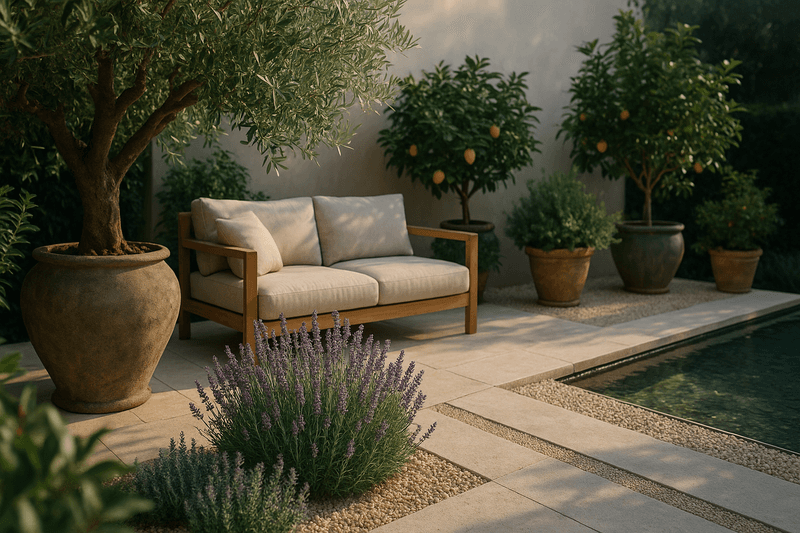
Our planting palette leans heavily on drought-tolerant mediterranean species: bougainvillea, oleander, olive, lavender and jasmine among them (Green Planet Gardening, homepage FAQ, "What plants work best in the Cyprus climate?"). These are the plants that respond most clearly to deep, infrequent watering, because they evolved with a wet winter and a long dry summer and are built to send roots down after a receding moisture front.
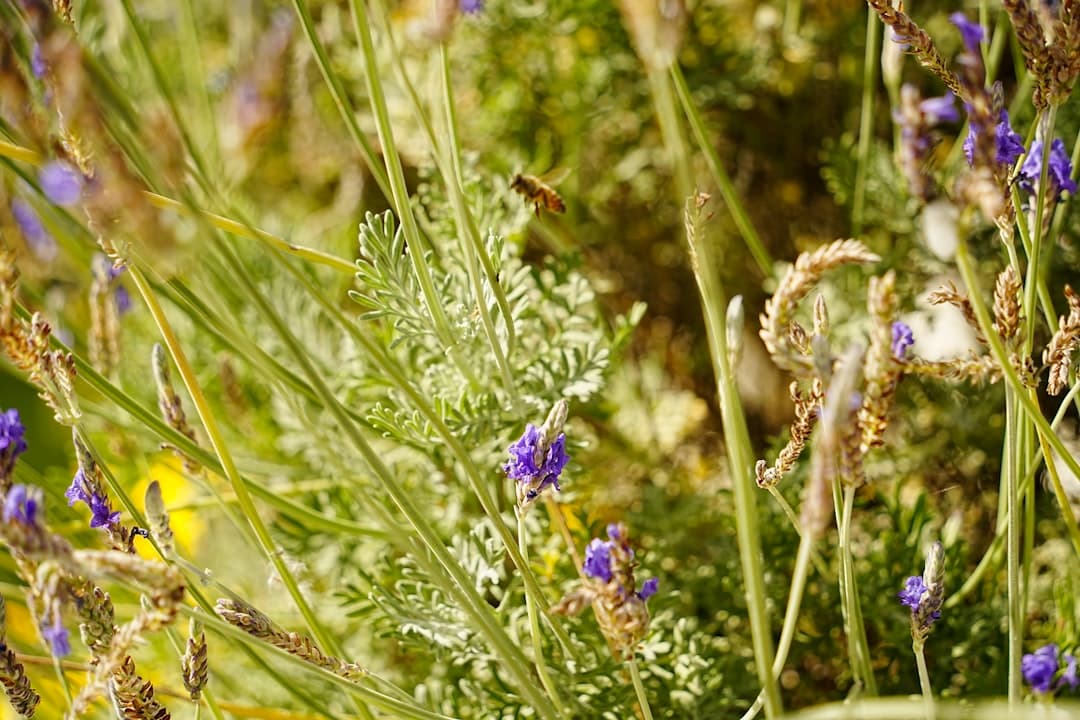
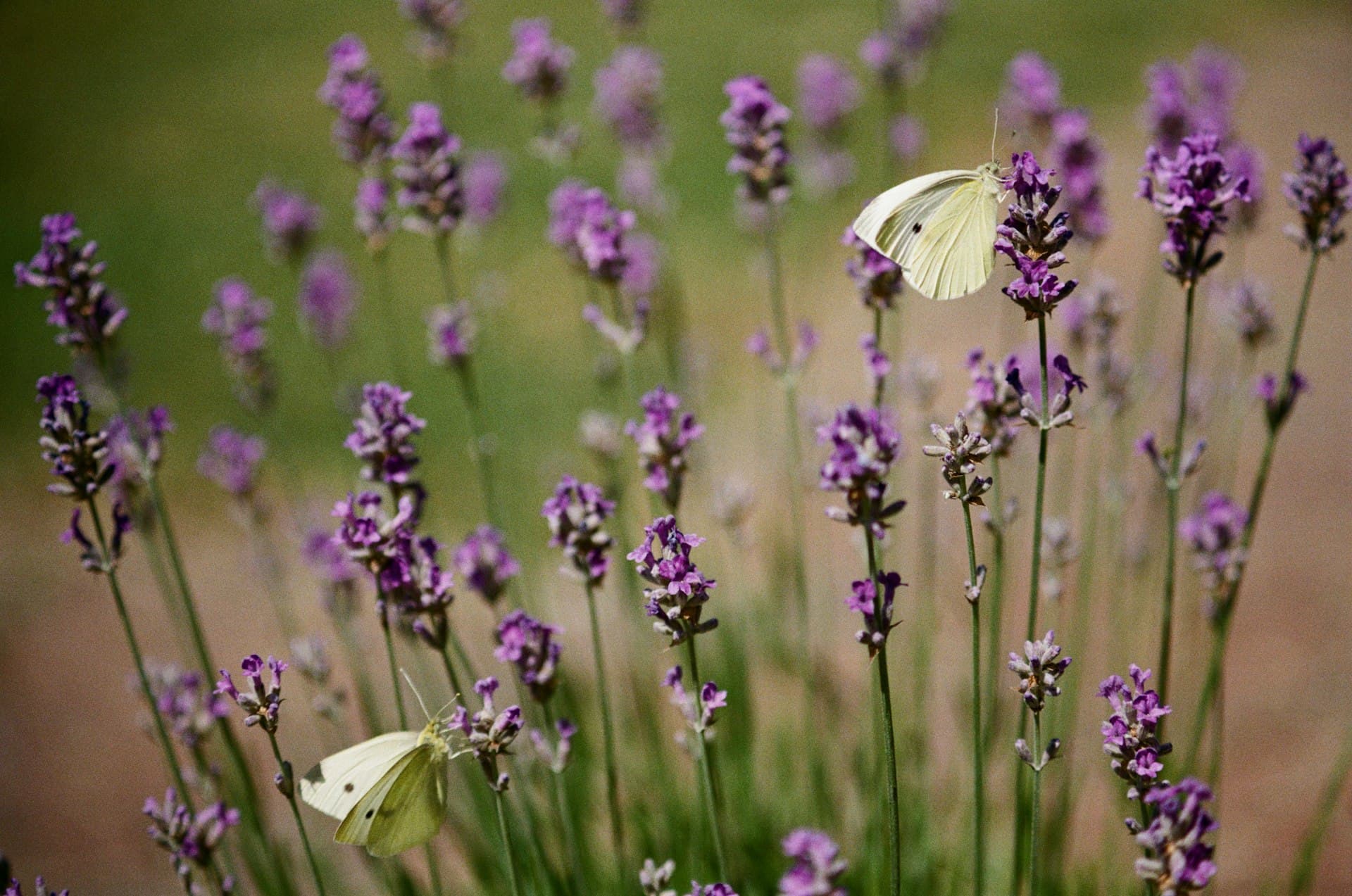
An olive kept on a daily trickle behaves like a shallow-rooted shrub and sulks the moment the system fails. The same tree, established over a few seasons on longer soaks at wider intervals, is a different plant entirely. Lavender in particular resents constantly damp surface soil around its crown, and does better in a fast-draining position that is soaked and then allowed to dry.
Where the rule bends
Deep and infrequent is a principle for established planting in open ground. It is not a rule for everything.
New planting has a root ball, not a root system. Until roots grow out into the surrounding soil, the plant can only drink from the volume it arrived with, so newly planted stock needs more frequent attention while it establishes, then a gradual transition to the deeper pattern.
Containers and raised planters have a fixed, small reservoir and no subsoil to draw from. They will often need water more frequently, and the useful version of "deep" here is watering until it runs from the drainage holes rather than wetting only the top of the compost.
Roof terraces sit in their own category, with shallow build-ups, reflected heat and wind on all sides. Limassol brings a particular mix of requirements in this respect, including humidity, roof terraces and the red palm weevil, which is why our maintenance approach there differs from an inland garden (Green Planet Gardening, homepage FAQ, "Do you serve all areas of Cyprus?").
Local water, local limits
Watering strategy in Cyprus cannot be separated from what is available and what is permitted. Our own service notes record Larnaca as the driest of the regions we cover, with roughly 330 mm of rainfall a year, irrigation restrictions in 2026 and slightly saline groundwater on plots near the salt lake (Green Planet Gardening, homepage FAQ). Salinity changes the calculation considerably, because salts concentrate in the root zone when small volumes are applied and are moved down the profile when larger volumes are applied.
Where restrictions are in force, the schedule has to be built inside them. Irrigation rules, abstraction and borehole permissions and rainwater arrangements are matters for the Water Development Department of the Ministry of Agriculture, Rural Development and Environment, and the current position should be confirmed with them before a system is designed or altered. Nothing in this article is a route around a restriction; it is an argument for making each permitted application count.
Getting it right on your plot
Deep irrigation is less a product than a habit, supported by a system that is zoned, timed and checked. We design and build gardens from concept to completion and run ongoing maintenance for clients across Cyprus, with our base in Paphos and maintenance teams working in Limassol and Larnaca (Green Planet Gardening, Services and homepage FAQ). More than a decade of working in one climate is mostly a long education in how water moves through these soils.
If you would like someone to walk the garden with you, check what your current system is actually delivering and talk through a watering pattern suited to your soil and planting, call +357 99 245 332. The first consultation is free and without obligation, and we respond within 24 hours (Green Planet Gardening, homepage). You can also read more about how the three of us work on the about page.
Green Planet Gardening
Luxury garden design, construction, and maintenance across Cyprus. Founded by the Knodaritis brothers with over a decade of Mediterranean landscaping excellence.
Book a free consultation →