Chloraka
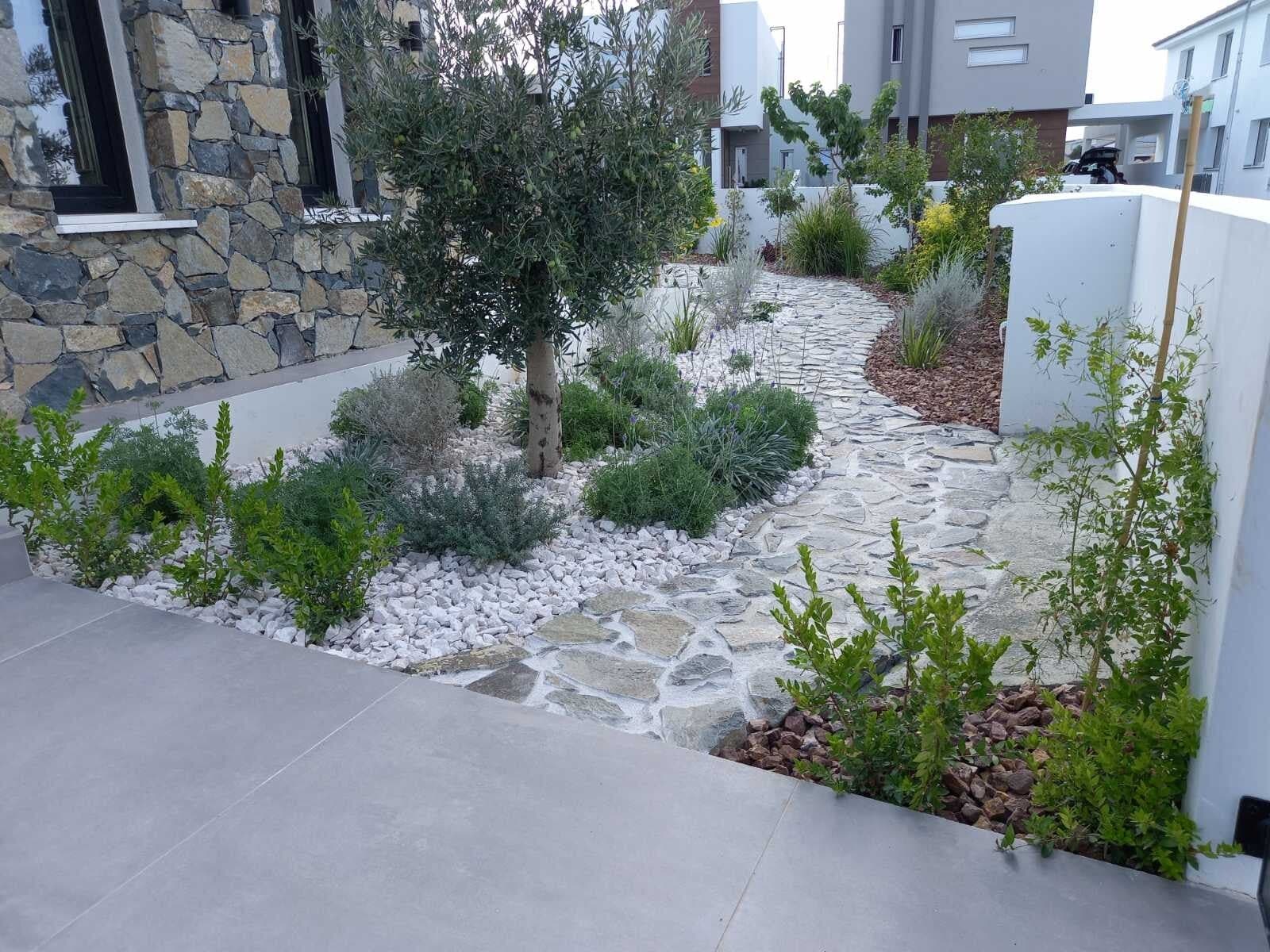
Chloraka sits on the coast immediately north of Paphos, a residential village that has expanded steadily over the last two decades into one of the more popular family-villa areas of the western Cyprus coast.

More than a decade of luxury landscaping tailored to Paphos's specific microclimate, soil, and character.
Paphos is where our family has tended luxury gardens for more than a decade — a UNESCO World Heritage city where ancient mosaics meet bougainvillea-draped villas, and where the Mediterranean climate produces some of Cyprus's most spectacular gardens. The mild coastal microclimate, salt-air exposure, and limestone-rich soils create both opportunity and challenge: the same conditions that allow olive, carob, and oleander to thrive year-round can stress poorly-chosen ornamentals within a single summer. Whether your property sits in the historic harbour district, the elevated luxury suburbs, or the new villa developments along the coast, Paphos gardens reward thoughtful design with year-round colour, fragrance, and outdoor living. We serve every neighbourhood from Kato Paphos to Universal, with deep local knowledge of the soil quirks, water restrictions, and microclimates that make each project unique.
Paphos enjoys Cyprus's mildest coastal climate — winters rarely below 10°C, summers averaging 32°C with sea-breezes moderating extreme heat. Rainfall concentrates between November and February (~450mm annually).
Predominantly alkaline limestone with pockets of clay near the Diarizos river valley. pH typically 7.8-8.4, requiring lime-tolerant plant selection.
More than a decade of work in this microclimate has taught us what succeeds — and what to avoid.
Salt-spray on properties within 500m of the coast can scorch sensitive foliage — selection of salt-tolerant species is essential.
Heritage-zone properties face permitting constraints on hardscape changes; we work within preservation guidelines.
Summer water restrictions (typically July-September) require irrigation systems with smart controllers and drought-buffering planting.
Wherever you are on the island, a Paphos garden lives with the same water reality — the figures behind why local, water-wise care matters here.
Cyprus averages about 500 mm of rain a year, and from June to August rainfall is almost negligible — under 5% of the annual total. A Cyprus garden is kept alive by irrigation and design, not by summer rain.
In February 2026 Cyprus's reservoirs held just 13.7% of capacity — the lowest dam inflows since records began in 1901 — and Paphos district enforced a 30% cut in irrigation water. On the south coast, water-wise planting is no longer optional.
Figures verified against their sources ·
About our garden services in Paphos
Yes. We have extensive experience working within the protected zone around Kato Paphos and the Archaeological Park, including liaising with the relevant antiquities and municipal authorities for any hardscape work that requires approval.
Bougainvillea, oleander, olive, carob, lavender, rosemary, plumbago, and ornamental grasses all flourish. For shade-tolerant areas, citrus, jasmine, and gardenia perform well with proper soil amendment for the alkaline conditions.
For most luxury villas we recommend bi-weekly maintenance during the growing season (March–October) and monthly during the cooler months. This includes irrigation checks, pruning, fertilising, and pest monitoring tailored to Paphos's specific climate.
We quote from a site visit, not a price list. Access, slope, soil, irrigation and whether it's a new build or a renovation all move the figure, so a short visit tells us far more than a rate card — and for heritage-zone properties we factor any permitting in early. You receive a clear, itemised proposal with no obligation.
All of them — from Kato Paphos and the harbour district up through the elevated suburbs to Universal, Tala and Tsada, and out along the coast to Coral Bay and Aphrodite Hills. Tell us the address and we bring the right local knowledge of its soil, salt exposure and microclimate.
Yes — ideally from early in the build, so planting, drainage and irrigation are designed in before the concrete is poured rather than retrofitted later. We work to your drawings, coordinate with the other trades on site, and hand over a garden that matches the design intent.
We design for the restriction, not around it: smart controllers, zoned drip lines, mulching and drought-buffering planting so the garden holds through the July–September limits. The aim is the right amount of water, in the right place, at the right time — healthy plants on realistic water.
Click any other pin to compare with neighbouring service areas.
The closest locations we serve to Paphos — useful if you have multiple properties or are comparing neighbourhoods.

Chloraka sits on the coast immediately north of Paphos, a residential village that has expanded steadily over the last two decades into one of the more popular family-villa areas of the western Cyprus coast.

Kato Paphos — the harbour district where Paphos meets the sea — combines tourist-zone bustle with quiet residential pockets that demand a particular kind of garden craft.

Geroskipou — historically the largest village in Cyprus before its formal town status — sits immediately east of Paphos with a settled residential character and gardens that range from traditional Cypriot courtyards to modern villa estates.

Tala is one of the most established expat villages in Cyprus — a hillside community above Paphos with sweeping sea views, cooler evenings than the coast, and a settled, garden-loving residential character.

Get in touch for a consultation tailored to your Paphos property — its Paphos District microclimate, soil conditions, and the design you have in mind.
Request a Consultation