
By the middle of October the Cypriot evening arrives earlier than most owners expect. The terrace is still warm enough to eat on, the jasmine still carries at dusk, and suddenly the garden that looked complete in July goes dark at the exact hour people start using it. This is usually the moment a client asks us about lanterns rather than about a full lighting scheme. It is a fair question, and lanterns deserve a more careful answer than they normally get.
A lantern is not a small version of a fixed fitting
A wall light or a recessed path light is architecture. It is decided once, wired or mounted once, and it stays. A lantern is furniture. It can be moved, hung, grouped, carried indoors, lent to the table where the guests actually sat down. That mobility is the whole point, and it changes how we choose one.
In practice this means three things. First, a lantern is judged at eye level and at close range, so the housing matters as much as the light. Second, it is picked up by hands, which rules out flimsy hinges and thin wire handles. Third, it will be left somewhere it was not designed for, such as a stone step, a pergola beam, or the fork of an olive tree, so the fixing has to be forgiving.
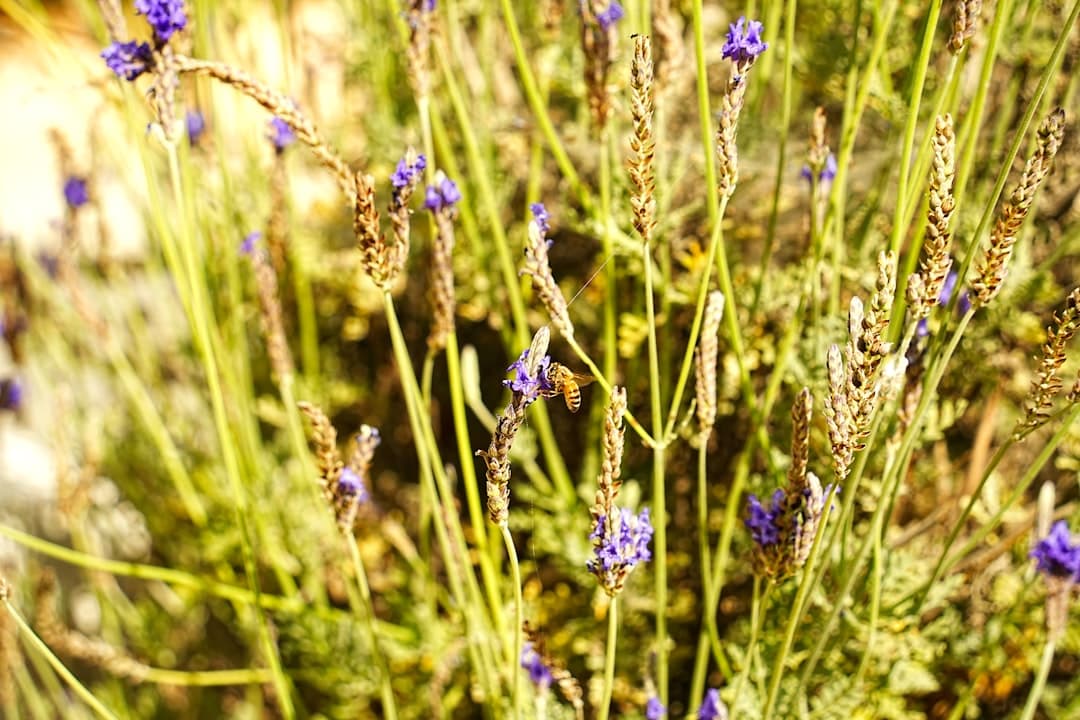
We treat lanterns as part of the planting composition rather than as hardware. A lantern set low inside a lavender planting throws a different evening than the same lantern hung at head height over a dining table, even though the specification sheet is identical.
Cyprus gives the panel plenty to work with, and that is only half the story
The island is one of the sunnier places in the European Union, and anyone can check the solar resource for a specific address using PVGIS, the photovoltaic information system published by the European Commission's Joint Research Centre. The input is sunlight, and Cyprus has it in quantity.
What the sunshine figure does not tell you is how a small panel behaves in a real garden. A lantern panel the size of a coaster has to collect enough in a day to run through a long evening, and it collects almost nothing if it sits under the canopy of a mature carob, behind a parapet, or in the shade a bougainvillea throws by August after being planted in bare sun in March. Panels also lose output to dust, and after a Cypriot summer there is dust on everything. A wipe with a damp cloth every few weeks is the single most useful habit an owner can adopt.
Heat works against the battery rather than the panel. Cells that spend July behind glass in full afternoon sun age faster than cells kept in filtered light. Where we can, we position lanterns so the panel gets clear morning and midday sun and some relief in the late afternoon, which in most Cypriot gardens is easier than it sounds.
What to look at before the look of the thing
Four details tell you most of what you need to know.
Ingress protection. The IP rating on the box is defined by IEC 60529, the international standard for degrees of protection provided by enclosures. The first digit covers solids such as dust, the second covers water. For a lantern that will sit near planting that gets watered and will take winter rain, look for a rating that covers both, and read the figure rather than the marketing word next to it.
A battery you can replace. A lantern whose cell is sealed in for life has a short life. One with an accessible, standard cell can be kept in service for years. This is the difference between a lighting scheme you maintain and one you buy again.
Warm, shielded light. DarkSky International's lighting principles are worth reading once: light only where it is needed, no brighter than needed, shielded so it goes downward, and warm in colour. Warm, low, shielded light also happens to be what makes a Mediterranean garden look settled rather than lit. Cool white light flattens stone and makes olive foliage look grey.
Weight and corrosion resistance. Near the coast, and particularly on properties near the Larnaca salt lake where, as we note in our homepage FAQ, groundwater can be slightly saline, fittings face salt in the air and in the irrigation water. Powder coating over steel chips. Solid brass, copper and good stainless behave better and age into something worth looking at.
Where they work in a Cypriot garden, and where they do not
Lanterns do their most useful work in places a fixed scheme reaches awkwardly: a gravel seating area away from the house, the turn of a path where a buried cable would have meant lifting stone, a pergola over a dining table, a roof terrace. Roof terraces are common in Limassol work, and the same FAQ records that Limassol brings humidity, roof terraces and the red palm weevil as its particular set of conditions. On a terrace, portable lanterns avoid penetrating waterproofing, which is reason enough on its own.
They are weaker where safety depends on them. Steps, level changes, pool edges and driveways want consistent output that does not vary with how cloudy the previous day was. There we specify fixed, mains or low voltage fittings and let lanterns do atmosphere. Mixing the two deliberately, rather than hoping lanterns will cover everything, is what keeps a garden looking effortless at night. That is the standard we hold ourselves to on every project, the quiet kind of result we describe as invisible perfection.
Planting carries half the effect. The drought-tolerant Mediterranean plants we work with most, bougainvillea, oleander, olive, lavender and jasmine, each read differently after dark. An olive grazed from below shows its trunk. Lavender takes warm light softly. Jasmine needs almost none, because at night it works through scent. None of this needs extra water, which matters in Larnaca, the driest of the regions we serve at around 330 mm of rainfall a year, with irrigation restrictions in force for 2026. We plan within those rules rather than around them.
Choosing and maintaining them without guesswork
If you are unsure what a plant in your garden is before you decide how to light it, our Plant AI 2.0 will identify it from a photograph and return the name, the plant family and a match score, with care notes written for the Cypriot climate. The example shown on our homepage is a bougainvillea at a 94 per cent match. Our assistant Gaia can also talk through plant choices and produce design mockups from your own photographs. Both are helpful starting points rather than binding advice, and any mockup Gaia generates is an AI generated image of an idea, not a photograph of a completed garden of ours.
Lanterns are also the part of a scheme owners can take on themselves. Wipe the panels. Bring a few indoors if a long spell of grey weather leaves them flat, and charge them in a bright window. Replace cells before they fail rather than after. Store the ones you use seasonally somewhere dry. A set treated that way keeps working, and keeps looking like it belongs.
A selection sits in the shop section of our website, and every order is invoiced. If you would rather have the lighting considered as part of the garden as a whole, that is what our services are for. Green Planet Gardening was founded by the Knodaritis brothers and has worked in Cypriot gardens for more than a decade, from our base in Paphos and across the island, including Limassol, Larnaca, Nicosia and the surrounding areas, with our own maintenance service in Limassol and Larnaca. Pambos handles client contact, quotations and planning, Marios the design and build side, and Angelos the ongoing care. We keep the number of simultaneous projects deliberately small so that each garden gets proper attention.
Where lighting forms part of a wider scheme, the FAQ on our homepage sets out the spans we usually see: a terrace or small garden is typically one to two weeks, while larger villa projects involving hardscaping, irrigation and mature planting usually take three to six weeks. Every project is quoted individually after a free first consultation, with no obligation and a reply within twenty four hours. If you would like to talk it through, call us on +357 99 245 332 and tell us which part of the garden goes dark first.
Green Planet Gardening
Luxury garden design, construction, and maintenance across Cyprus. Founded by the Knodaritis brothers with over a decade of Mediterranean landscaping excellence.
Book a free consultation →Continue Reading
 Garden Design
 Garden Design
 Garden Design