
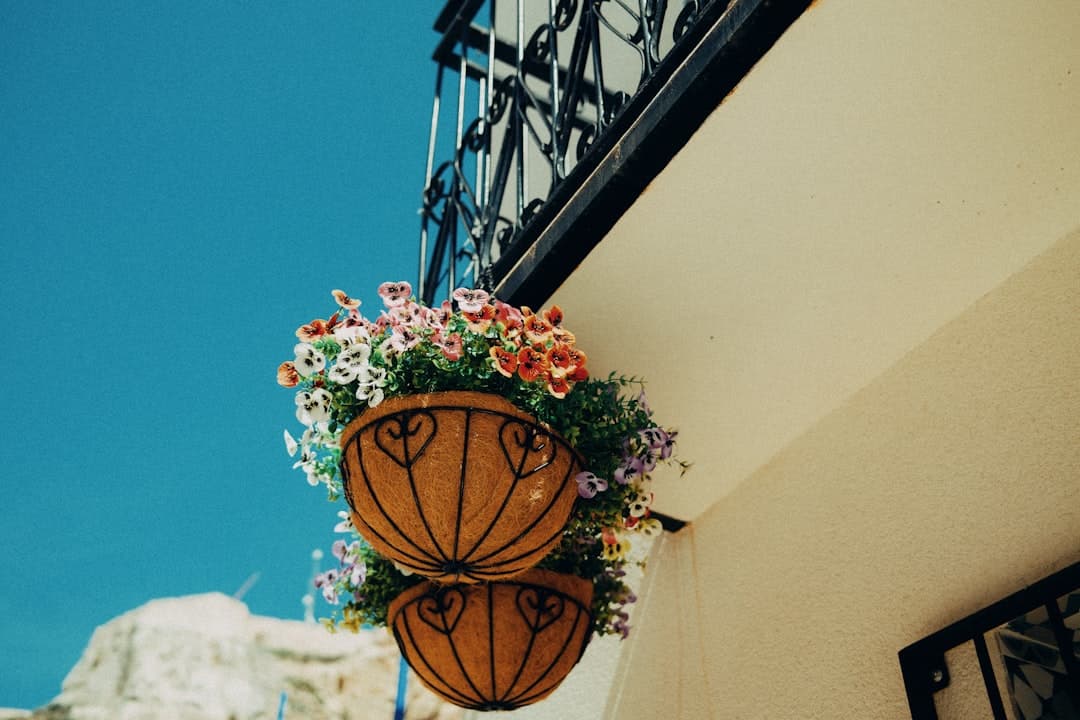
By mid-July, a terracotta pot on a Limassol balcony can reach soil temperatures of 45°C or higher — hot enough to cook the roots of even the toughest Mediterranean plants within hours. If you've ever watched a thriving bougainvillea wilt into crisped brown leaves overnight, you already know that container plants Cyprus summer heat conditions demand a completely different survival strategy than in-ground gardening. The good news: with the right pots, watering rhythm, and a few protective tricks, your terrace pots can sail through August looking as lush as they did in April.
Quick answer: During Cyprus summer (June–September), most potted plants need watering once daily, and small pots or those in full afternoon sun may need it twice a day — early morning and again at dusk. Terracotta and unglazed clay pots dry out faster than plastic or glazed ceramic, so adjust frequency by material, pot size, and sun exposure rather than following a fixed calendar rule.
Why Container Plants Struggle So Much in Cyprus Summer
Potted plants face a uniquely brutal set of conditions here that in-ground plants simply don't. Understanding the "why" is the first step to fixing the problem.
The Physics of a Hot Pot
Unlike garden soil, which is insulated by surrounding earth and stays relatively cool even in peak summer, a container is exposed on all sides to direct sun and radiant heat from paving, walls, and reflective surfaces. Cyprus regularly delivers air temperatures above 38°C between June and August, but the internal temperature of a dark-colored or metal pot can run 10–15°C hotter than the surrounding air. That heat cooks fine root hairs, the very structures responsible for water and nutrient uptake — and once those roots die back, no amount of watering will save the plant quickly.
Small Soil Volume, Fast Evaporation
A 40cm pot might hold 20–30 litres of soil — a tiny reservoir compared to the open ground. On a 35°C day with low humidity and the notorious Cyprus summer wind, that soil volume can lose significant moisture within hours, especially in unglazed terracotta. This is why potted plants dry out several times faster than the same species planted in a border.
300+
Sunny Days/Year
35°C+
Summer Peaks
500mm
Annual Rainfall
Root Confinement Compounds Stress
Container roots can't spread laterally to chase moisture and cooler soil layers the way in-ground roots do. They're trapped in a finite space, so once that space overheats or dries out, the plant has nowhere to retreat. This is also why container specimens benefit enormously from companion planting or grouping — shading each other's pots reduces the individual heat load on every plant in the cluster.
How Often Should You Water Potted Plants in Cyprus During Summer?
This is the single most common question we get from villa and apartment owners across Limassol, Paphos, and Nicosia every June.
The General Rule
As a baseline, water most container plants once daily throughout June, July, and August — ideally at first light, around 6–7am, before the sun has a chance to heat the soil surface. Small pots (under 30cm diameter), plants in full afternoon sun, and shallow-rooted species like petunias or basil often need a second watering in the early evening, after 6pm, once the day's heat has broken.
Adjusting by Pot Size and Material
- Pots under 25cm: Check moisture twice daily; these dry out fastest and may need watering both morning and evening.
- Pots 30–50cm: Usually once daily is sufficient, watered deeply until water runs from the drainage holes.
- Large pots and planters (60cm+): Can often go on an every-1–2-day schedule since the greater soil mass retains moisture longer.
💡Pro Tip
Why Timing Matters More Than Volume
Watering at midday is one of the most common mistakes we see in Cyprus gardens. Water applied when the sun is directly overhead evaporates before it penetrates the root zone, and droplets on foliage can even scorch leaves through a lensing effect. Early morning watering allows plants to take up moisture before the heat of the day arrives, building resilience for the hours ahead. If you can only water once, morning is always superior to evening for setting the plant up for a hot day — but a combined morning-and-dusk routine is ideal for anything in full sun.
If manual watering twice a day sounds unsustainable for your lifestyle or a larger villa terrace, it may be time to consider automating the process — our guide to essential irrigation systems for luxury villa gardens in Cyprus covers drip systems designed specifically for container collections.
Terracotta vs Plastic Pots: Which Wins in Cyprus Heat?
The pot material you choose has an outsized impact on how much work summer survival actually requires.
Terracotta and Unglazed Clay
Classic terracotta is porous, allowing air and moisture to pass through the pot walls. This is a double-edged sword in Cyprus: it prevents waterlogging and root rot beautifully, but it also means water evaporates through the pot itself, not just the soil surface. In peak summer, an unglazed terracotta pot can lose noticeably more moisture than a sealed alternative of the same size, meaning more frequent watering — but significantly better root health and a much lower risk of overwatering, which makes terracotta forgiving for gardeners who tend to water generously.
Plastic and Resin Pots
Plastic pots retain moisture far longer since water can't escape through the walls, cutting watering frequency roughly in half compared to terracotta of the same dimensions. The tradeoff is heat: dark plastic absorbs and conducts solar radiation directly into the root zone, and without terracotta's evaporative cooling effect, roots inside can overheat even when soil moisture is adequate. Choose light-colored or white plastic and resin pots for Cyprus balconies, and always avoid black plastic nursery pots as long-term outdoor containers here.
Glazed Ceramic: The Middle Ground
Glazed ceramic pots offer a useful compromise — the glaze seals the porous clay, slowing evaporation similarly to plastic, while the thicker ceramic walls provide better insulation against heat transfer than thin plastic. They're heavier and pricier, but for statement pieces on a shaded terrace, they're an excellent choice.
⚠️Important
What Are the Best Pots for Hot Climates Like Cyprus?
Beyond the terracotta-versus-plastic debate, several design and material features make a measurable difference to plant survival here.
Light Colors Over Dark
Choose pots in white, cream, sandy beige, or pale terracotta rather than charcoal, black, or dark green. Light colors reflect solar radiation rather than absorbing it, keeping the root zone measurably cooler throughout the day — often the single easiest upgrade you can make.
Double-Walled and Self-Watering Designs
Double-walled pots, which have an air gap between an inner and outer shell, provide genuine insulation against heat transfer, similar to a thermos. Self-watering containers with a reservoir base are also excellent for Cyprus summers, buffering plants against the risk of missing a watering during a heatwave or a few days away.
Size Matters More Than You'd Think
Larger pots aren't just about mature root systems — they're a heat-buffering strategy. A greater volume of soil heats and cools more slowly than a small volume, moderating temperature swings the same way a large body of water stays cooler than a puddle. When upgrading a plant's container, sizing up generously (not just one size up) pays real dividends by August.
Bougainvillea
Bougainvillea spectabilis
Thrives in large terracotta or glazed pots; established plants tolerate Cyprus summer heat exceptionally well once watered deeply 2–3 times weekly, though young plants in small pots need daily attention.
Trailing Rosemary
Salvia rosmarinus 'Prostratus'
A superb Mediterranean container plant — drought-tolerant, aromatic, and ideal for large light-colored pots where its woody roots can spread without overheating.
Agave
Agave americana
Practically immune to Cyprus summer stress; store water in fleshy leaves and thrive in terracotta with minimal watering — perfect for low-maintenance statement pots.
Reviving Heat-Stressed Plants: A Rescue Protocol
Even with the best routine, a scorching heatwave or a missed watering day can leave your container plants wilted, crisped, or dropping leaves. Here's how to bring them back.
Step 1: Move to Shade Immediately
The instant you spot heat stress — drooping stems, curling or crisping leaf edges, or a grayish, dull leaf color — move the pot out of direct sun into full or partial shade. This alone stops further damage while the plant recovers.
Step 2: Water Deeply, Not Frequently
Give the plant a slow, deep soak until water runs freely from the drainage holes, rather than a quick surface splash. If the soil has become hydrophobic (water beading and running off rather than absorbing — common in very dry terracotta pots), stand the pot in a basin of water for 20–30 minutes to let moisture wick up from below.
Step 3: Resist the Urge to Fertilize
Never feed a heat-stressed plant. Fertilizer salts increase osmotic stress on already-damaged roots and can compound the injury. Wait at least two to three weeks after full recovery before resuming feeding.
Step 4: Prune Only the Truly Dead
Remove crisped, brown, beyond-recovery foliage, but leave anything still green or pliable — even partially damaged leaves continue photosynthesizing and help the plant rebuild energy reserves during recovery.
Most container plants we're asked to save in July haven't been under-watered so much as under-shaded. Cyprus gardeners fixate on the watering can, but a plant baking in a black pot on white marble at 3pm will struggle no matter how much water you give it. Shade first, water second — that order matters.
💡Pro Tip
Using Shade Cloth to Protect Patio Plants
For terraces and balconies with unavoidable all-day sun exposure, shade cloth is one of the most effective and underused tools in a Cyprus container garden.
Choosing the Right Density
Shade cloth is rated by the percentage of sunlight it blocks. For most Mediterranean container plants, a 30–50% shade cloth strikes the right balance — enough relief to prevent scorching during peak intensity (roughly 12pm–4pm) without starving sun-loving species of the light they need. Delicate plants like ferns or hydrangeas in pots may benefit from 60–70% shade cloth instead.
Positioning for Maximum Benefit
Angle shade cloth to block the harsh western and southern afternoon sun specifically, since morning sun is generally gentler and beneficial even for heat-sensitive plants. A simple frame, pergola attachment, or even a repurposed umbrella positioned to block afternoon rays can transform a struggling terrace into a genuinely productive growing space.
Combining Shade Cloth with Reflective Surfaces
Be mindful of light-colored paving, white walls, and glass balustrades common on Cyprus terraces — these surfaces bounce additional heat and light back onto plants from below and the sides, sometimes negating the benefit of overhead shade cloth alone. In these settings, consider raising pots on plant stands away from radiant marble or tile, and adding a secondary side screen of shade cloth where reflected heat is intense.
If you're planning your terrace or patio planting scheme from scratch, our guide to the best outdoor living plants for Cyprus patios and terraces in 2026 offers species specifically selected for resilience in these reflective, high-heat environments.
Building a Low-Maintenance, Heat-Resilient Container Garden
The most sustainable long-term solution isn't fighting the Cyprus summer plant by plant — it's designing your container collection to need less intervention in the first place.
Choose Mediterranean-Native and Drought-Adapted Species
Plants that evolved in this climate — rosemary, lavender, agave, olive, bougainvillea, oleander — have built-in mechanisms (waxy leaves, deep taproots, water storage tissue) that dramatically reduce how often you need to intervene. Swapping thirsty, non-native ornamentals for these species is the single biggest lever for reducing summer maintenance.
Mulch Every Pot
A 3–5cm layer of organic mulch (bark chips, gravel, or pine straw) on the soil surface of every container reduces evaporation substantially and moderates soil temperature swings. It's a five-minute task per pot that pays dividends all summer long.
🌿Eco Tip
Consider a Xeriscape-Inspired Container Palette
If daily watering during a Cyprus summer feels unsustainable for your schedule, applying xeriscaping principles to your pots — grouping by water need, prioritizing drought-tolerant species, and maximizing soil volume — can cut your maintenance burden dramatically. Our full guide to xeriscaping in Cyprus and low-water garden design for hot summers walks through applying these principles at both garden and container scale.
Frequently Asked Questions
How often should you water potted plants in Cyprus during summer?
Water most container plants once daily during June, July, and August, ideally at dawn. Small pots under 30cm, plants in full afternoon sun, and thin-walled terracotta containers often need a second watering in the early evening. Always check soil moisture with a finger test rather than watering on a rigid schedule alone.
Are terracotta or plastic pots better for Cyprus summer heat?
Terracotta pots breathe and prevent overwatering but dry out faster and require more frequent watering. Plastic pots retain moisture longer but absorb more heat unless they're light-colored. For most Cyprus gardeners, light-colored glazed ceramic or white plastic offers the best balance of moisture retention and heat reflection.
Can heat-stressed container plants be saved?
Yes, in most cases. Move the plant to shade immediately, water deeply until it drains from the base, and avoid fertilizing until full recovery — typically two to three weeks. Only prune foliage that is fully crisped and brown; leave any green or pliable leaves intact to support recovery.
What shade cloth percentage is best for patio plants in Cyprus?
A 30–50% shade cloth suits most Mediterranean container plants, blocking peak afternoon intensity without excessively limiting light. Shade-sensitive species like ferns or hydrangeas benefit from denser 60–70% cloth, positioned specifically to block harsh western and southern afternoon sun.
Keeping a container garden thriving through a Cyprus summer takes the right combination of pot choice, watering rhythm, and shade strategy — but every terrace, balcony, and villa courtyard has its own microclimate that changes the equation. If you'd like expert eyes on your specific setup, book a free consultation with Green Planet Gardening and let our team design a container planting and irrigation plan that thrives through the hottest Cyprus months, year after year.
Green Planet Gardening
Luxury garden design, construction, and maintenance across Cyprus. Founded by the Knodaritis brothers with over a decade of Mediterranean landscaping excellence.
Book a free consultation →Continue Reading
 Plant Guide
 Plant Guide
 Plant Guide