
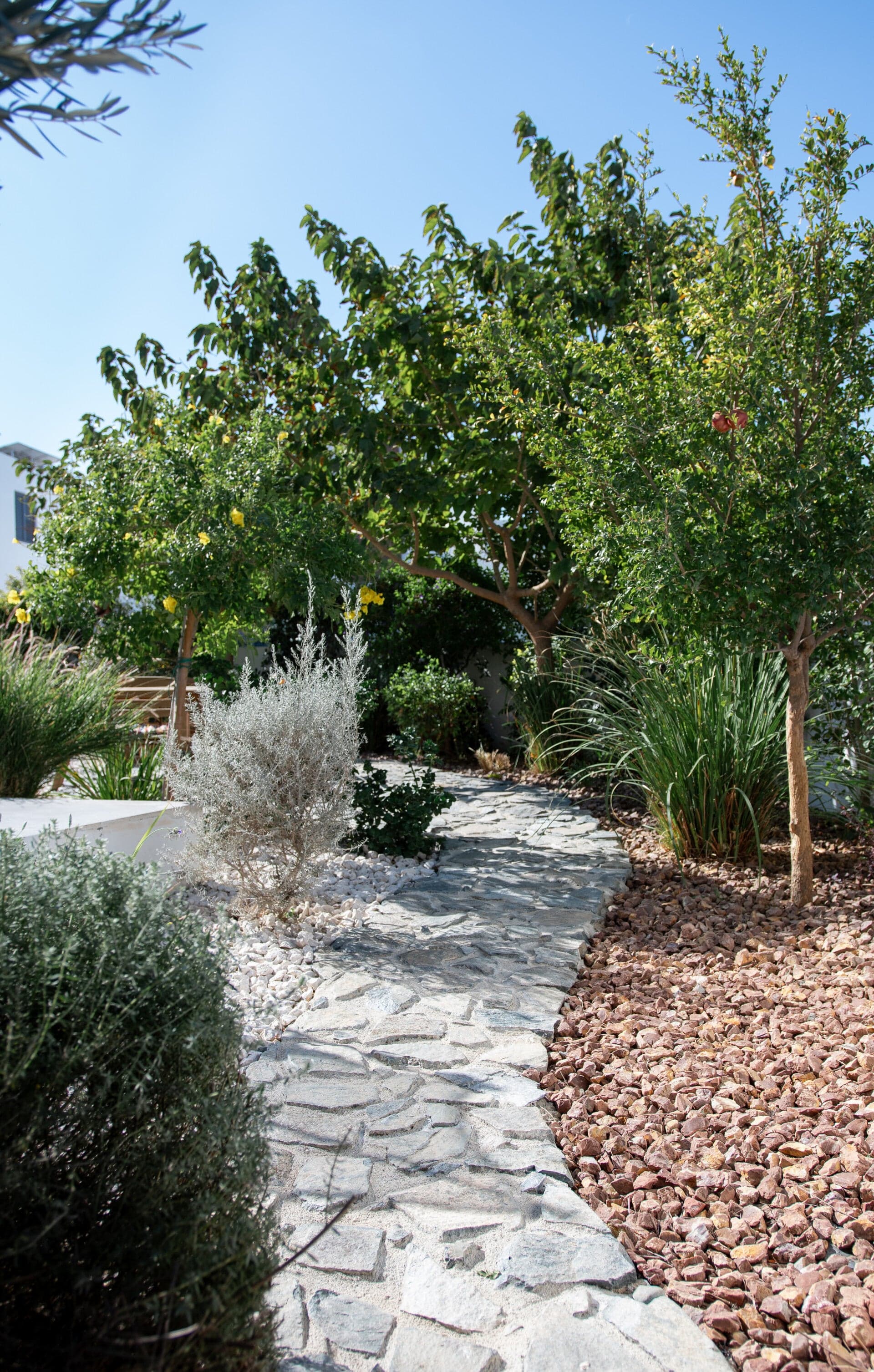
Communal garden maintenance in Larnaca, for complexes and the people who run them.
The shared gardens are the first thing every owner and visitor sees. We keep them on a fixed schedule, and the committee sees what was done after every visit.
Arrange a walk-round →In a complex, the garden belongs to everyone and no one
A residential complex with shared areas has a management committee of owners, and the care of those areas is its responsibility, as Cyprus Mail sets out. Some committees run it themselves, others hand it to a management company. Either way, the people deciding are answering to every owner in the building, and a garden contract has to be something they can stand behind.
One crew, the same shared grounds every time
The entrance and the front planting
The approach is what owners and buyers judge the whole complex by. Hedges, beds and borders at the entrance are kept in shape on every visit, not tidied up before a sale.
The shared irrigation
One leaking zone on a communal system can water a path for weeks before anyone reports it. Emitters and run times are checked on each visit and adjusted with the season.
Pool surrounds, hedges and palms
The areas residents actually use are kept clear and safe, and mature palms are inspected on a routine, because a palm weevil problem is visible from the ground only when it is already late.
A record for the committee
Photographs and a short note of what was done go to the committee or the management company after each visit, so nobody has to take the work on trust.
A scope the whole committee can sign off
We start with a walk round the grounds with the committee or the managing company. From that comes a written scope: which areas are covered, how often, and what is outside it. It gives the committee something concrete to put to the owners and to budget from the common expenses, and it means the visits can be checked against what was agreed. Our own crew does the work, not subcontractors, and the same team returns each time, so they learn the grounds and the residents learn their faces.
The first year after the developer hands over
A newly finished complex often comes with young planting and an irrigation system nobody has tested through a summer. Taking the grounds on from the start is easier than rescuing them later. If the complex has only just been handed over, our page on new build gardens in Larnaca explains what building work leaves in the ground.
Two things a complex cannot leave to chance
Shared gardens fail quietly, because each owner assumes someone else has noticed. These are the two risks we keep in front of every committee in Larnaca.
The red palm weevil (Rhynchophorus ferrugineus) has been established in Cyprus since 2006. It kills mature Phoenix palms from the inside, and external symptoms often appear only once the palm is beyond saving — which is why inspection has to be routine, not reactive.
About 70% of all water used in Cyprus goes to irrigation and roughly 20% to households. In a country this water-stressed, an efficient irrigation system and drought-tolerant planting are the difference between a garden that survives the summer and one that doesn't.
Figures verified against their sources ·
More than a decade of high-end landscaping across Cyprus — private villas, boutique hotels, resort grounds and residential developments — delivered by a family team that treats every project like its own home.
Questions From Committees, Answered
The management committee of owners. Where a complex has shared areas, looking after them falls to the committee, which can do it directly or contract a management company to do it on its behalf.
Either. We work with committees that manage their own complex and with management companies acting for one. What matters is that there is one agreed scope and one point of contact.
Whatever is agreed in the written scope, usually the entrance and front planting, shared beds and hedges, the communal irrigation, pool surrounds and palm inspections. Anything outside the scope is quoted separately before it is done.
After each visit the committee or the management company receives photographs and a short note of what was done. It is a record anyone on the committee can show to the other owners.
Yes. The complex is assigned to one of our own crews, not to subcontractors, so the same people return each time and get to know the grounds and the irrigation.
Yes, and it is the best moment to do it. A new complex usually has young planting and an untested irrigation system, and both are easier to look after from the first day than to put right after a summer.
From a walk round and the agreed scope. The size of the grounds, what they contain and how often we visit decide the cost, so we see the complex first and then put a proposal in writing for the committee.
Yes. Private gardens are agreed separately with each owner, apart from the scope for the shared grounds.
Private gardens in the area are covered by our page on garden maintenance in Larnaca, and the water side has its own page, garden irrigation in Larnaca. Committees comparing options may find a maintenance contract compared with paying per visit useful, and what garden maintenance in Larnaca costs explains what drives the price. Developers planning a new scheme can read our page for developers. For the wider area, see gardening in Larnaca.