
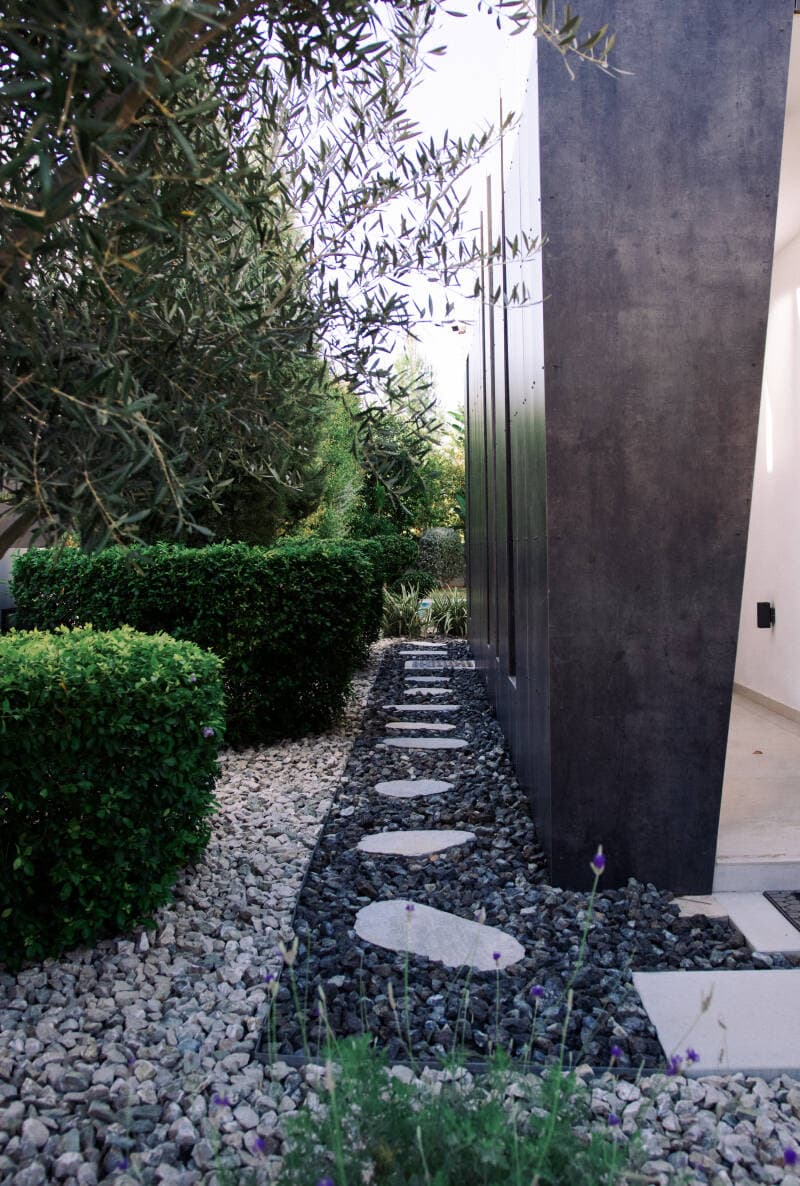
New build gardens in Larnaca, from bare plot to first summer.
The house is finished and the plot around it is not. We turn what the builders leave behind into a garden, in the order that keeps it alive through its first Larnaca summer.
Arrange a site visit →A new house usually comes with the hardest soil on the street
Building work is hard on the ground. The topsoil is often scraped away or buried, heavy machinery compacts what is left, and rubble and imported fill end up where the beds should be. A plot can look ready and still be a poor place for roots. That is why a new build garden starts underground, long before anything green goes in.
The new streets of Larnaca, and their empty gardens
Much of the new housing in the district is going up around Livadia, Oroklini and Pyla, where the district's local government reports the strongest development. We work across all three, and in Aradippou, Kiti and Larnaca itself, so a new villa in any of them is close to ground we already know.
Six steps, in the order a garden needs them
A site visit
We walk the plot with you, look at what the building work has left, and talk through how you want to use the garden, from shade and privacy to how much time you want to spend on it.
Clearing and rebuilding the ground
Rubble out, compacted ground opened up, and good soil built back where the planting will go. It is the least visible part of the job and the one everything else depends on.
Water and power planned before the paving
Irrigation lines and lighting cables are far easier to lay before terraces and paths go down. If your builder is still on site, it is worth asking them to leave sleeves under the paving for both.
Hard surfaces
Stone paths, terraces and walls, built to the design so the planting has the space and the shade it was drawn with.
Planting in the right season
Trees and shrubs settle best when they go in during the cooler months, so the timing of the planting is planned around the weather, not only around the handover date.
The first year
A new garden needs closer attention in its first summer than it ever will again. That is where regular maintenance takes over.
In Larnaca, the irrigation is part of the design
Larnaca is the driest coast we work on, so a new garden here is planned around its water from the first drawing. Beds are grouped by how much they drink, so thirsty and drought-tolerant plants never share a line. Plots near the salt lake can carry slightly saline groundwater, which changes what should be planted there. The details of the system itself are on our page on garden irrigation in Larnaca.
What the island asks of a new garden
A garden planted today has to cope with an island that is short of water. These are the figures we design around when we plan a new garden in Larnaca.
Cyprus averages about 500 mm of rain a year, and from June to August rainfall is almost negligible — under 5% of the annual total. A Cyprus garden is kept alive by irrigation and design, not by summer rain.
In February 2026 Cyprus's reservoirs held just 13.7% of capacity — the lowest dam inflows since records began in 1901 — and Paphos district enforced a 30% cut in irrigation water. On the south coast, water-wise planting is no longer optional.
Figures verified against their sources ·
Choosing the surfaces while the plot is still empty
An empty plot is the easiest moment to decide what covers it. A real lawn gives the softest garden and drinks the most water. Artificial grass stays green without irrigation but gets hot in full sun. Gravel and drought-tolerant planting need the least care once they are established. We explain the trade-offs honestly in xeriscaping compared with a lawn garden and artificial grass compared with a real lawn.
Light is easiest before the ground is closed
Wired garden lighting needs cables under the ground, so the time to plan it is while the plot is still open. Where that moment has passed, or where you would rather not run cables at all, solar lighting lights paths and planting without any.
The first summer is the real test
The first summer is when a new planting is most at risk, because its roots have not yet reached beyond the soil they were planted in. Once the garden is in, it moves onto regular garden maintenance in Larnaca: the same crew on a fixed schedule, the irrigation checked through the hot months, and photographs after every visit.
More than a decade of high-end landscaping across Cyprus — private villas, boutique hotels, resort grounds and residential developments — delivered by a family team that treats every project like its own home.
New Build Questions, Answered
As soon as the site is clear and the ground has been rebuilt where the planting will go. The planting itself is best timed for the cooler months, so if the house is handed over in summer, the hard surfaces and the irrigation can go in first and the trees and shrubs follow when the weather turns.
More than most owners expect. Topsoil is often removed or buried under imported fill, machinery compacts the ground, and broken concrete, mortar and packaging end up just below the surface. None of it is unusual, and all of it is easier to deal with before the garden is planted than after.
Yes, wherever possible. Lines that cross under a terrace or a path are simple to lay while the ground is open and awkward afterwards. If paving is already planned, ask whoever lays it to leave sleeves underneath for irrigation and for lighting cables.
Yes. Many new homes are handed over with a basic finish around them, and that is a good starting point rather than a problem. We look at what is worth keeping, what is struggling, and what the space could be, and then design from there.
The cooler months. Trees and shrubs planted then have time to root before their first summer. Planting in the heat is possible, but the plants need far more water and attention to come through it.
It depends on how you will use the garden and how much water you want it to need. A lawn is the softest and the thirstiest, artificial grass needs no irrigation but gets hot in full sun, and gravel with drought-tolerant planting asks the least of you. Many gardens use a little of each.
From a site visit and an agreed scope. The size of the plot, the state of the ground, the hard surfaces and the irrigation all change the work, so we see the plot first and then put a proposal in writing.
Developers planning a whole scheme will find our approach on the page for developers. If the property is part of a complex with shared grounds, see communal garden maintenance in Larnaca. For the wider area, read gardening in Larnaca, and for the soil itself, the best compost and soil improvers for Cypriot clay. Planning trees for the first winter? Start with the best trees to plant in Cyprus in autumn.