
If you've ever sipped your morning coffee on a Limassol terrace only to catch your neighbour's curious wave from their upstairs balcony, you already understand why the best evergreen trees for privacy screening in Cyprus have become the single most requested feature in villa gardens across the island. Unlike a wooden fence that warps in the summer heat or a wall that costs a small fortune in permits, a well-chosen living screen grows more beautiful every year while blocking unwanted eyes, muffling road noise, and filtering the relentless Mediterranean sun.
Quick Answer: The best evergreen trees for privacy screening in Cyprus are the Italian Cypress (Cupressus sempervirens), Eugenia/Syzygium hedge (Syzygium australe), Photinia 'Red Robin', and Oleander (Nerium oleander) — all of which tolerate drought, thrive in alkaline soil, and reach effective screening height (2.5–6 metres) within 3–5 years when planted correctly in autumn.
Choosing the right species isn't just about height — it's about matching root behaviour, water needs, and growth habit to Cyprus's long dry summers, occasional winter frosts in the Troodos foothills, and the alkaline, often clay-heavy soils found from Paphos to Famagusta. Get it right, and you'll have a living wall that needs minimal intervention once established. Get it wrong, and you'll be fighting invasive roots, patchy die-back, or a screen that takes a decade to do its job.
300+
Sunny Days/Year
35°C+
Summer Peaks
500mm
Annual Rainfall
What Is the Best Evergreen Tree for Privacy in Cyprus?
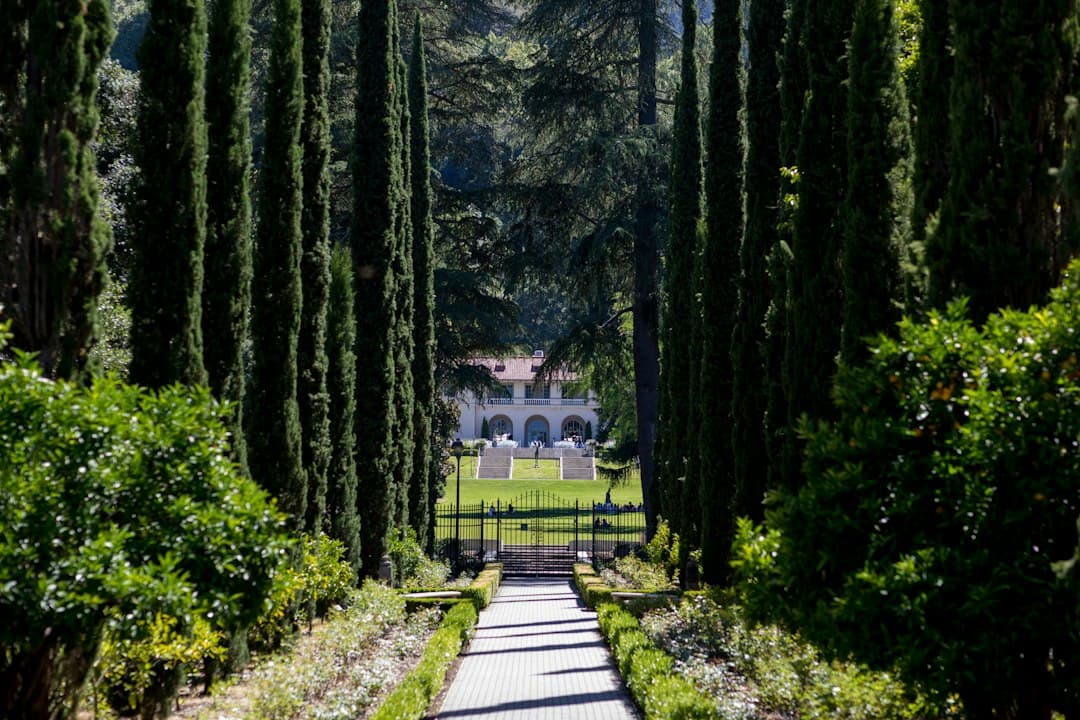
For most Cyprus gardens, the Italian Cypress (Cupressus sempervirens) remains the gold-standard answer. Its narrow, columnar form means you can plant it close to boundaries without sacrificing garden space, and its deep taproot — unlike the invasive surface roots of eucalyptus or ficus — makes it far less likely to damage swimming pools, patios, or pipework. A mature specimen reaches 4–6 metres within five to seven years and can ultimately tower past 15 metres, offering dense, permanent screening that defines the classic Mediterranean skyline.
Why Cypress Outperforms Other Species Here
Cypress thrives precisely because it evolved for conditions nearly identical to ours: thin limestone soils, scorching summers, and mild wet winters. Once established (usually after two full growing seasons), it needs little more than occasional deep watering and requires almost no pruning to maintain its natural shape — a huge advantage for villa owners who want privacy without a maintenance contract.
When Cypress Isn't the Right Choice
If you need screening below 2 metres, or you're working with a narrow balcony garden where a 15-metre giant would eventually overwhelm the plot, cypress becomes impractical. In these cases, shrubby evergreens like Photinia or Eugenia, kept clipped as a tall hedge, deliver privacy without the long-term scale commitment.
💡Pro Tip
Which Fast-Growing Screening Trees Work Best in a Mediterranean Climate?
Clients routinely ask for fast growing screening trees for Mediterranean gardens, and the honest answer is that "fast" and "resilient" don't always go hand in hand. Several species, however, strike an excellent balance.
Eugenia (Syzygium australe) for Dense, Clippable Screens
Eugenia is arguably the most popular living-fence choice in new Cyprus developments, and for good reason. It grows 40–60cm per year once established, tolerates heavy clipping into a tight formal hedge or a looser informal screen, and produces glossy, reddish new growth that adds seasonal colour against its deep green foliage. It does appreciate regular irrigation in its first two summers but becomes markedly more drought-tolerant afterward.
Photinia 'Red Robin' for Colour and Coverage
Photinia brings the same vivid red flush of new leaves as Eugenia but handles slightly cooler, higher-altitude gardens better — making it a strong option for properties in Platres, Pedoulas, or other Troodos-adjacent locations where winter temperatures occasionally dip below 5°C.
Oleander for Speed and Toughness Along Boundaries
Few plants match oleander's combination of speed, flowering interest, and sheer stubbornness in poor soil. It can reach 3 metres in just three years, flowers from May through October in shades of pink, white, and red, and shrugs off roadside pollution and salt spray — ideal for coastal villa boundaries near Larnaca or Ayia Napa.
Italian Cypress
Cupressus sempervirens
The classic Mediterranean privacy tree. Columnar habit, deep non-invasive roots, and drought tolerance make it ideal for Cyprus boundaries and villa driveways.
Eugenia Hedge
Syzygium australe
Fast-growing, densely branching evergreen with reddish new growth. Excellent for clipped formal screens 2–4 metres tall across Cyprus gardens.
Oleander
Nerium oleander
A tough, fast-flowering screening shrub perfect for coastal boundaries, though note all parts are toxic if ingested — plant away from areas accessible to pets and young children.
⚠️Important
How Do I Choose Trees for Villa Boundary Privacy Without Blocking Views?
This is where many Cyprus homeowners get it wrong: they plant the tallest, densest option available and later regret losing the sea or mountain view they bought the villa for in the first place. Trees for villa boundary privacy work best when you think in layers rather than a single solid wall.
Layering Height for Selective Screening
Rather than a uniform row, stagger your planting: tall columnar cypress at the points where you most need to block a neighbour's upper-floor window, interspersed with lower, rounder evergreens like Eugenia or rosemary hedging where you still want to glimpse the horizon. This creates privacy exactly where needed while preserving sightlines elsewhere — a technique landscape designers call "selective screening."
Matching Tree Choice to Boundary Distance
If your property line sits close to your neighbour's, avoid wide-canopied trees like carob or eucalyptus that will eventually encroach overhead and create disputes over shade and leaf litter. Columnar or narrow-habit species — cypress, bay laurel (Laurus nobilis), or Pittosporum tenuifolium — give you height without horizontal sprawl.
Considering Root Systems Near Pools, Pipes, and Foundations
Before planting along a boundary wall, always check what lies underground. Eucalyptus, ficus, and even some mature olive trees can send roots several metres in search of water, risking damage to pool shells, irrigation lines, and foundations. For a full breakdown of planting techniques that protect your hardscaping, see our guide on how to plant a hedge in Cyprus this autumn.
In fifteen years of designing Cyprus gardens, I've learned that privacy screening isn't about building the tallest green wall possible — it's about choosing the right tree for the right sightline. A well-placed cypress can solve a privacy problem that a dozen badly-placed shrubs never will.
What's the Best Time to Plant Privacy Trees in Cyprus?
Timing dramatically affects how quickly your screening trees establish and whether they survive their first brutal Cyprus summer.
Why Autumn Planting Gives Trees a Head Start
Planting between late October and early December allows root systems to establish throughout the mild, rainy winter months before facing summer heat stress. Trees planted in autumn typically need 40–50% less supplemental irrigation during their first summer compared to those planted in spring, because their root systems have had four to five months to spread before temperatures climb past 30°C. We cover this in detail in our month-by-month autumn planting guide.
Why Spring Planting Requires Extra Vigilance
If autumn planting isn't possible, late February through March is the next-best window — but expect to water newly planted screening trees two to three times weekly through their first summer, tapering as autumn approaches.
Avoiding the July–August Planting Trap
Never plant evergreen screening trees during peak summer. Soil temperatures above 35°C combined with transplant shock cause significant root failure, even in drought-tolerant species like cypress and oleander.
🌿Eco Tip
How Many Trees Do I Need for Effective Year-Round Privacy Screening?
For year round privacy screening plants to function as an actual visual barrier rather than a decorative accent, spacing and density matter as much as species choice.
Standard Spacing Guidelines by Species
Italian Cypress should be planted 1.5–2 metres apart to form a continuous screen within five years without overcrowding. Eugenia and Photinia, being broader shrubs, need 80cm–1 metre spacing for a dense hedge effect within two to three years. Oleander, with its multi-stemmed sprawling habit, performs well at 1.2–1.5 metre spacing.
Calculating Screening Height Versus Viewing Distance
A general rule used by Mediterranean landscape designers: for full privacy from a standing position at 10 metres distance, your screen needs to reach roughly 2.2–2.5 metres in height. For second-floor balcony privacy, you'll typically need trees reaching 4–6 metres, which is where cypress earns its keep over shrub-form alternatives.
Combining Species for Layered, Resilient Screening
Mixing two or three species — say, cypress for height, Eugenia for mid-level density, and a flowering oleander for colour and lower coverage — creates a screen that's more resistant to disease outbreaks (which can devastate monoculture hedges) and more visually interesting than a single repeated species. It also provides a built-in backup: if one species struggles in a particular microclimate pocket of your garden, the others continue carrying the screening function.
💡Pro Tip
What Soil and Irrigation Conditions Do Privacy Trees Need in Cyprus?
Cyprus's predominantly alkaline, calcareous soils (typically pH 7.5–8.5) suit most of the species discussed here perfectly, but drainage is the real make-or-break factor.
Improving Heavy Clay Soil Before Planting
In clay-heavy areas common around Nicosia and parts of the Mesaoria plain, dig planting holes at least twice the width of the root ball and amend with coarse sand or perlite plus well-rotted compost to prevent waterlogging — a major cause of root rot in cypress and oleander alike.
Establishing a Deep Watering Routine
For the first two years, water deeply once weekly during summer (allowing water to penetrate 40–50cm down) rather than shallow daily watering, which encourages weak, surface-level roots. Once established, most of the trees recommended here need supplemental irrigation only during extended drought periods, typically once every two to three weeks in peak summer.
Mulching to Conserve Moisture and Suppress Weeds
A 5–7cm layer of organic mulch (bark chips or dried carob pods, both widely available locally) around the base of each tree — kept clear of the trunk itself — reduces evaporation significantly and can cut summer watering frequency nearly in half.
If you're also planning shade trees alongside your privacy screen, our guide to the best fast-growing shade trees for Cyprus gardens pairs well with this planting plan, since many homeowners combine boundary screening with a shaded seating area in the same project.
FAQ: Evergreen Privacy Trees in Cyprus
What is the fastest-growing evergreen privacy tree for Cyprus gardens?
Eugenia (Syzygium australe) and oleander are the fastest-establishing options, adding 40–60cm of growth annually once their root systems are settled, typically reaching effective screening height within three years.
How far from my boundary wall should I plant privacy trees?
As a general rule, plant at least 1–1.5 metres from boundary walls for shrub-form species like Eugenia or Photinia, and 2 metres for larger trees like Italian Cypress, to allow for root expansion and avoid structural damage.
Do evergreen privacy trees need a lot of water in Cyprus summers?
Not once established. Species like cypress, oleander, and Photinia become genuinely drought-tolerant after their first two summers, typically needing deep watering only every two to three weeks during peak heat, compared to weekly watering in their establishment phase.
Can I mix different tree species for a privacy screen?
Yes, and it's often recommended. Combining a tall columnar species like cypress with mid-height shrubs like Eugenia or flowering oleander creates layered privacy, visual interest, and resilience against disease or pest outbreaks that could otherwise affect a single-species hedge.
Choosing and planting the right combination of evergreen trees is one of the highest-value investments you can make in a Cyprus garden — but getting the spacing, soil preparation, and species selection right on the first attempt saves years of frustration. If you'd like expert eyes on your specific boundary, sightlines, and soil conditions, book a free consultation with Green Planet Gardening and we'll help you design a privacy screen that thrives for decades, not just one summer.
Green Planet Gardening
Luxury garden design, construction, and maintenance across Cyprus. Founded by the Knodaritis brothers with over a decade of Mediterranean landscaping excellence.
Book a free consultation →Continue Reading
 Outdoor Living
 Outdoor Living
 Outdoor Living