
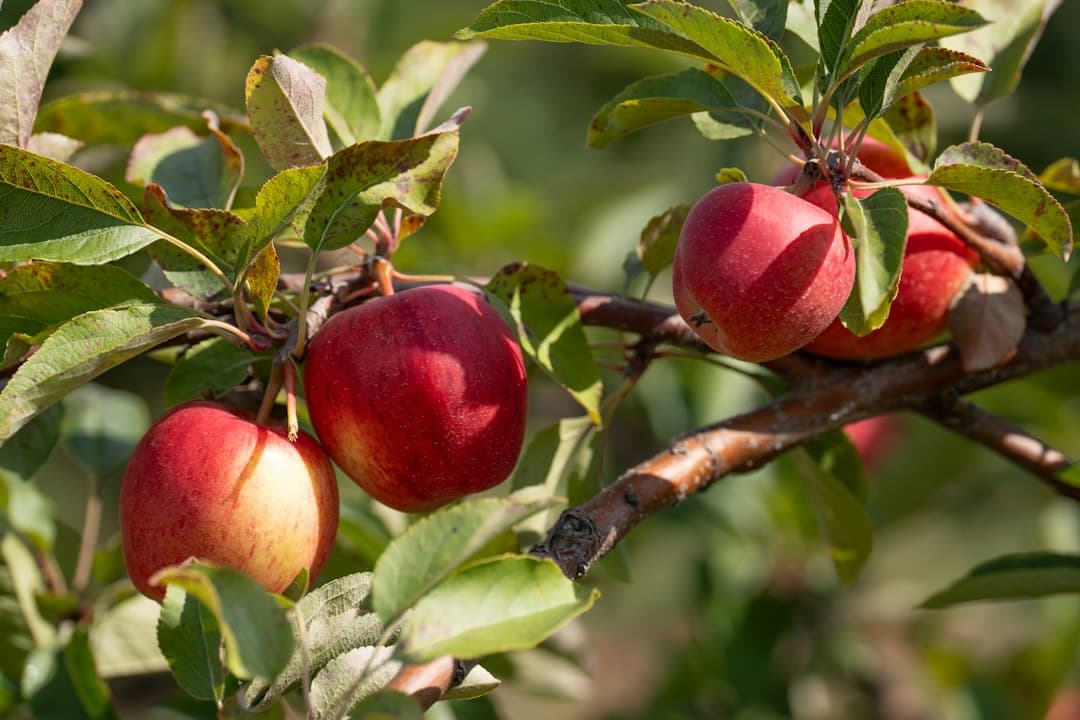
There's a particular kind of magic in planting a bare-root fruit tree: a bundle of seemingly lifeless roots and dormant wood that, within eighteen months, will blossom pink-white in the Cyprus spring and hand you your first peaches or apples. November is the opening of that window — and if you've ever wondered why nurseries across the island suddenly stock leafless, soil-free trees wrapped in damp sacking this time of year, this guide will tell you exactly why, and exactly how to get it right.
Quick answer: The best time to plant bare-root fruit trees in Cyprus is from mid-November through late February, while trees are fully dormant and soil temperatures remain above 10°C. Planting in this window allows roots to establish before the stress of spring growth and summer heat, giving bare-root trees a significant head start over container-grown trees planted later in the year.
Why November Is Prime Time for Bare-Root Planting in Cyprus
What "Bare-Root" Actually Means
Bare-root fruit trees are field-grown in nurseries, then lifted from the ground during dormancy — typically late autumn — with their roots shaken free of soil rather than potted into containers. They're sold with roots exposed (wrapped in damp hessian, sawdust, or plastic to prevent drying out), rather than in a pot of compost.
This matters more than it sounds. A bare-root tree has a root system that developed naturally in open field soil, spreading outward without the circling and restriction that often happens in a nursery pot. When you plant it, those roots make direct contact with your garden soil immediately — no transition, no barrier of foreign potting mix for new roots to push through.
Why Cyprus's Climate Makes November the Ideal Window
300+
Sunny Days/Year
35°C+
Summer Peaks
500mm
Annual Rainfall
10-15°C
Average November Soil Temp
Cyprus's long, brutal summer is precisely why dormant-season planting matters so much here. Unlike cooler European climates where trees can go in the ground across a wide autumn-to-spring window, our soil temperatures drop into the ideal 10-15°C root-establishment range quite late in the year — typically not until mid-to-late November — and climb back into stressful territory by April.
That gives us a genuinely narrow but highly productive planting season. Trees planted in November benefit from:
- Three to four months of cool, moist soil before spring growth begins, allowing roots to establish without competing with leaf and fruit production
- Natural autumn-winter rainfall (Cyprus receives the bulk of its annual 500mm between November and March), reducing irrigation needs during the critical establishment phase
- A full head start before summer dormancy stress, meaning a November-planted tree faces its first Cyprus summer with a far more developed root system than one planted in spring
💡Pro Tip
A bare-root tree planted in November will typically establish a more extensive root system by the following summer than a container tree planted in March — even though the container tree looked "further along" at planting time. Roots, not leaves, determine survival in a Cyprus summer.
Bare-Root vs Container Trees: Which Should You Choose?
This is one of the most common questions we get from Cyprus gardeners in autumn, and the honest answer is: it depends on timing and goals.
The Case for Bare-Root
Bare-root trees are typically 30-50% cheaper than their container-grown equivalents, since nurseries save on pots, compost, and the labour of maintaining potted stock. They also tend to establish faster in open ground, precisely because their root systems haven't been confined. For keen gardeners planting during the proper November-to-February dormant window, bare-root is almost always the superior choice — better roots, better value, better long-term vigour.
When Container Trees Make More Sense
Container-grown trees have one major advantage: flexibility. Because their roots are protected in a pot of compost, they can technically be planted almost any time of year (avoiding peak summer), making them the right choice if you've missed the dormant season or need a tree in the ground outside the November-February window. They're also more forgiving of planting mistakes, since the root ball stays intact.
Quick Comparison
| Factor | Bare-Root | Container-Grown |
|---|---|---|
| Best planting window | Nov–Feb (dormant) | Almost year-round |
| Cost | Lower | Higher |
| Root establishment | Faster, more natural | Slower, can circle in pot |
| Transport/handling | Lightweight, easy | Heavier, bulkier |
| Availability | Seasonal only | Year-round |
If you're planning a wider planting project — say, pairing fruit trees with ornamentals — it's worth reading our guide to best trees to plant in Cyprus in autumn for a month-by-month view of what goes in the ground when.
Step-by-Step: How to Plant Bare-Root Trees in Cyprus
Step 1: Choose and Order Your Trees Early
Good Cyprus nurseries sell out of popular bare-root varieties — apples, pears, peaches, plums, pomegranates, figs — by early December, so order in October or very early November if possible. If you haven't yet decided what to plant, our guide to best fruit trees to plant in Cyprus in autumn (besides citrus) covers the varieties that genuinely thrive in our climate, including low-chill cultivars bred for mild winters.
Peach 'Early Grande'
Prunus persica 'Early Grande'
A low-chill variety (needing only around 275 chill hours) bred specifically for warm climates, making it one of the most reliable bare-root stone fruits for Cyprus gardens. Fruits in late May.
Pomegranate
Punica granatum
Exceptionally well-suited to Cyprus's hot, dry summers once established. Tolerant of poor soils and drought, with glossy foliage and brilliant orange-red flowers from May onward.
Step 2: Inspect the Roots Before You Buy or Plant
Healthy bare-root trees have moist (not dry, not slimy) roots, a fibrous spread of fine feeder roots alongside the main structural ones, and no mushy, blackened, or foul-smelling sections. If roots look shrivelled or the tree has clearly been out of soil too long without protection, don't plant it — it's unlikely to recover.
⚠️Important
Never allow bare roots to dry out in the sun or wind, even for twenty minutes. In Cyprus's dry November air, exposed roots can desiccate within an hour. Keep them wrapped and shaded until the moment of planting.
Step 3: Prepare the Soil
Dig a planting hole roughly twice the width of the root spread but no deeper than the roots themselves — planting too deep is one of the most common and most fatal mistakes with bare-root trees. The point where the trunk flares out into roots (and, for grafted trees, the graft union) should sit at or just above soil level once planted.
Cyprus's heavy clay soils, common across the central plain and many inland villages, benefit enormously from amendment at this stage. Loosen the base and sides of the hole with a fork to avoid creating a "bathtub" effect where water pools and roots rot. Mix the excavated soil with well-rotted compost — a ratio of roughly 2:1 native soil to compost works well for most fruit trees. For a deeper look at getting this right, see our dedicated guide on best compost and soil amendments for Cyprus clay soil.
Step 4: Position and Backfill
Before backfilling, soak the roots in a bucket of water for one to two hours — this rehydrates fine root hairs and dramatically improves establishment. Spread the roots naturally over a small mound of soil at the base of the hole, position the tree so the graft union faces away from prevailing summer winds (typically from the west in most Cyprus regions), and backfill in stages, firming gently as you go to eliminate large air pockets without compacting the soil into a dense mass.
Step 5: Water, Mulch, and Stake
Water thoroughly immediately after planting — even though the soil is likely moist from autumn rains, this initial watering settles soil around the roots and closes remaining air gaps. Apply a 5-7cm layer of organic mulch (straw, bark, or well-rotted compost) in a wide ring around the trunk, keeping it clear of the trunk itself to prevent collar rot. Stake only if the tree is particularly tall or the planting site is exposed to wind; most bare-root whips establish better with minimal staking, which encourages trunk strength.
🌿Eco Tip
Skip synthetic fertilisers at planting time. A freshly bare-rooted tree doesn't need a nutrient boost — it needs undisturbed roots and consistent moisture. Save feeding for the following spring, once new growth confirms the tree has established.
Aftercare Through Cyprus Winter and Into Spring
Watering During the Dormant Months
Counterintuitively, newly planted bare-root trees need relatively little supplemental watering in a normal Cyprus winter, since November-to-February rainfall usually covers requirements. However, in dry spells lasting more than two to three weeks, give a deep soak rather than frequent shallow watering, which encourages roots to grow downward and outward in search of moisture.
Protecting Against Late Frost and Wind
While Cyprus winters are mild compared to continental Europe, inland and higher-altitude gardens (Troodos foothills, Marathasa, Solea valleys) can see occasional overnight frosts in December and January. Wrapping young trunks with hessian or installing a simple windbreak on the exposed side of the planting significantly reduces frost crack and desiccation risk for the first winter.
What to Expect Come Spring
By March, you should see swelling buds along the branches — the first true sign of successful establishment. Resist the urge to prune heavily in this first year beyond removing any damaged or crossing branches; let the tree direct its early energy into root development rather than recovering from aggressive cuts.
The single biggest mistake we see with bare-root planting in Cyprus isn't the planting itself — it's timing. Gardeners wait for "nice weather" in March and wonder why their tree struggles through its first summer. November's cooler soil and winter rains do half the work for you, for free.
Common Mistakes to Avoid
Planting Too Early or Too Late
Trees planted before dormancy (early-mid November in warmer coastal areas) or after bud break (late February in most years) lose the core advantage of bare-root planting. If you're unsure, ask your nursery supplier when their stock was lifted from the field — this tells you how long the tree has already been dormant and out of soil.
Ignoring Root Spread in Hole Sizing
A hole that's deep but narrow forces roots to circle or bend sharply, creating weak points that can girdle the tree years later. Width matters more than depth with bare-root planting.
Planting Near Established Trees Without Spacing Consideration
Fruit trees need genuine elbow room both above and below ground. If you're planning a larger orchard-style planting, our guide on planting an olive grove in a Cyprus garden includes spacing principles that apply well beyond olives — the same root-competition logic governs apple, pear, and stone fruit spacing too.
Apple 'Anna'
Malus domestica 'Anna'
One of the few apple varieties with a chill requirement low enough (around 200-300 hours) to fruit reliably in Cyprus lowland gardens. Produces crisp, red-blushed fruit by early-to-mid summer.
Frequently Asked Questions
When is the best time to plant bare-root fruit trees in Cyprus?
The ideal planting window is mid-November through late February, while trees are fully dormant and Cyprus soil temperatures sit between 10-15°C. Planting within this window, rather than in spring, gives roots three to four months to establish before summer heat arrives.
Can I plant bare-root citrus trees in November?
Generally, no — citrus trees are evergreen, not deciduous, and are almost always sold as container-grown rather than bare-root, since they don't have a true leafless dormant phase. For citrus-specific planting and care advice, see our complete guide to growing citrus trees in Cyprus.
Do bare-root trees need more water than container trees after planting?
Immediately after planting, both need a thorough initial soak, but bare-root trees planted in November typically need less supplemental irrigation overall, since they coincide with Cyprus's natural winter rainfall. Container trees planted in warmer months require far more frequent watering to establish.
How long can bare-root trees stay out of the ground before planting?
Ideally, plant within 24-48 hours of purchase. If delayed, "heel in" the tree by temporarily burying the roots in loose, moist soil or a large container of damp compost in a shaded spot, which can extend viability by one to two weeks without harming the tree.
Getting bare-root planting right is one of those small windows each year where a little precise timing pays off for a decade or more of fruit. If you'd rather have experienced hands choose the right varieties, prepare your soil, and plant with the care outlined above, the team at Green Planet Gardening offers free consultations across Cyprus throughout November — book yours today and let's get your orchard started on the right footing this season.
Green Planet Gardening
Luxury garden design, construction, and maintenance across Cyprus. Founded by the Knodaritis brothers with over a decade of Mediterranean landscaping excellence.
Book a free consultation →Continue Reading
 Outdoor Living
 Outdoor Living
 Outdoor Living