
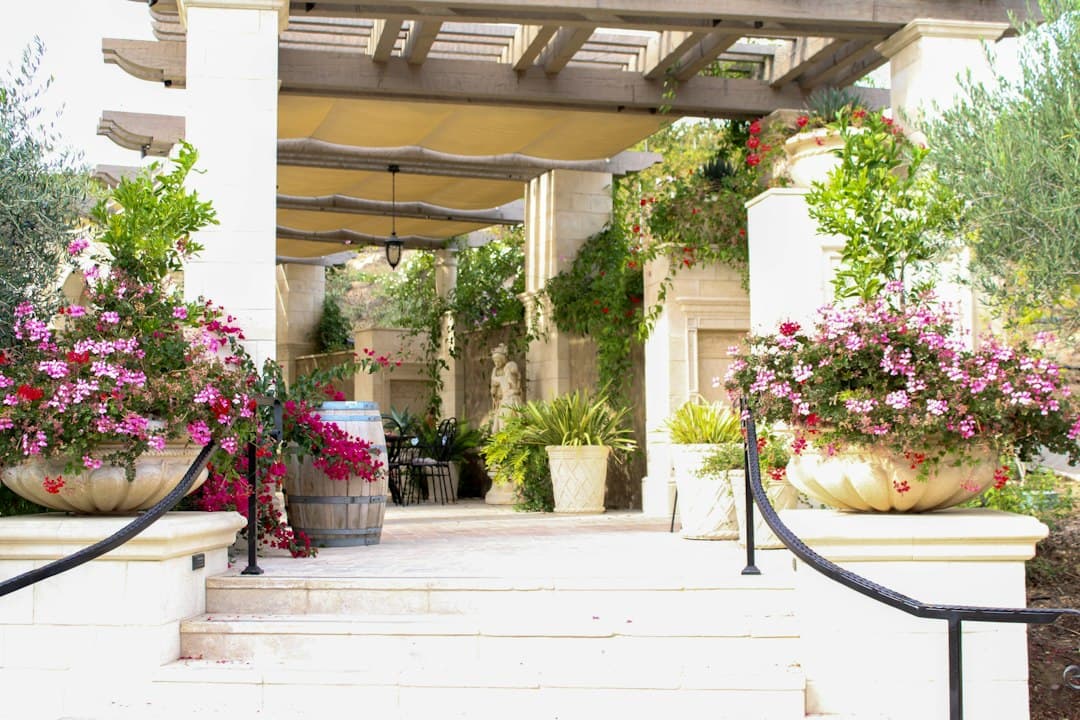
How to Plant Wisteria in Cyprus: Autumn Planting and Training Guide for Pergolas
There's a reason wisteria-draped pergolas appear on nearly every Mediterranean garden wish list — and in Cyprus, where our long, hot summers make shaded outdoor living essential, few plants deliver that romantic, violet-curtained canopy quite like wisteria. Learning how to plant wisteria in Cyprus correctly, particularly with the right autumn timing and training technique, is the difference between a vine that sulks for a decade and one that erupts into fragrant lavender racemes by its third spring.
Quick Answer: The best time to plant wisteria in Cyprus is during autumn, specifically late October through November, once the summer heat has broken but the soil is still warm enough to encourage root establishment before winter dormancy. Autumn planting gives wisteria 4-5 months of cool, moist conditions to develop a strong root system before facing its first Cyprus summer, dramatically improving survival rates compared to spring planting.
When Is the Best Time to Plant Wisteria in Cyprus?
Timing is everything with wisteria, and Cyprus gardeners who plant at the wrong moment often spend years fighting transplant shock, scorched foliage, or weak root development that stunts flowering for a decade.
Why Autumn Beats Spring Planting
In temperate climates, spring planting is common advice — but Cyprus isn't temperate. Our Mediterranean climate brings scorching, bone-dry summers that arrive with little mercy, often exceeding 38°C by July. A wisteria planted in spring has barely two or three months to establish roots before facing that brutal heat, and the stress frequently shows up as leaf scorch, stunted growth, or even plant death.
Autumn planting, by contrast, lets the vine settle in during Cyprus's mild, rain-fed season. Soil temperatures remain warm (typically 18-22°C through November), which encourages active root growth even as top growth slows for winter dormancy. By the time summer heat arrives the following year, your wisteria already has a deep, resilient root system capable of drawing moisture from lower soil layers.
💡Pro Tip
Reading Cyprus's Microclimates Before You Plant
Cyprus isn't climatically uniform, and this matters enormously for wisteria timing and siting. Coastal areas like Limassol and Paphos stay milder into December, allowing a slightly extended planting window, while inland regions around Nicosia and the Troodos foothills experience sharper autumn temperature drops and benefit from planting slightly earlier, ideally by mid-November.
If you're also reworking other parts of your garden this season, it's worth reading How to Plan Your Cyprus Garden Renovation Before Autumn Planting Season so your wisteria planting fits into a broader, well-sequenced autumn planting plan rather than being an isolated afterthought.
How Do You Plant Wisteria for a Pergola in Cyprus?
Correct planting technique matters as much as timing. Wisteria is a vigorous, long-lived vine — some specimens in Mediterranean gardens live well beyond 50 years — so the effort you invest at planting pays dividends for decades.
Choosing the Right Spot Near Your Pergola
Wisteria needs full sun for at least six hours daily to flower reliably; in shade, it produces lush foliage but few, if any, blooms. Position your planting hole 45-60cm from the base of a pergola post, angling the young vine toward the structure rather than planting it directly against a post, which can trap moisture against the timber or metal and encourage rot or rust over time.
If you're still deciding on the pergola structure itself, our guide to Bioclimatic Pergolas for Cyprus Villas: The Complete Guide to Choosing the Right Shade Structure is essential reading — wisteria's considerable weight (mature vines can weigh several hundred kilograms once wood-laden) demands a robustly engineered frame, not a flimsy decorative one.
Soil Preparation and Planting Steps
Wisteria tolerates Cyprus's typically alkaline, clay-heavy soils reasonably well, but it performs best in well-draining soil with a pH between 6.0 and 7.5. Heavy, waterlogged clay is the most common cause of root rot in local gardens, so amend accordingly.
- Dig a planting hole at least 60cm wide and 60cm deep — generous sizing matters more for wisteria than most climbers, given its vigorous root system.
- Improve drainage by mixing in coarse grit or horticultural sand if your soil is heavy clay, along with well-rotted compost or aged manure at a ratio of roughly one-third organic matter to two-thirds native soil.
- Position the root ball so the graft union (visible as a slight swelling near the base) sits just above soil level — burying it can cause the rootstock to send up unwanted suckers.
- Backfill gradually, firming gently to eliminate air pockets, then water deeply with at least 15-20 litres to settle the soil around the roots.
- Mulch generously with 5-7cm of organic mulch, keeping it clear of the stem itself, to conserve moisture and moderate soil temperature through winter.
⚠️Important
Watering Schedule for the First Year
Newly planted wisteria needs consistent moisture through its first Cyprus summer, even though mature plants become relatively drought-tolerant. Water deeply twice weekly during the first summer (June through September), providing roughly 20 litres per session, tapering to once weekly by the second year as roots deepen. Avoid shallow, frequent watering, which encourages a weak, surface-level root system poorly suited to our dry summers.
How Do You Train Wisteria on a Pergola?
Training wisteria on a pergola is where patience and technique separate a tangled, unproductive vine from the cascading, flower-heavy canopy you see in postcard images of Mediterranean courtyards.
Establishing the Main Framework (Years 1-2)
In the first two years, your goal is structural, not floral — resist the temptation to let wisteria flower-hunt before its "skeleton" is established. Select one or two strong leading stems and tie them loosely to a vertical support leading up to the pergola crossbeams, using soft garden twine that won't cut into bark as the stem thickens.
Once the leader reaches the horizontal pergola beams, pinch out the growing tip to encourage lateral branching. Train these laterals horizontally along the beams in opposite directions, spacing main branches roughly 30-40cm apart. This horizontal framework becomes the permanent "skeleton" from which flowering spurs will develop for decades.
Most wisteria failures in Cyprus gardens aren't about climate at all — they're about pruning. People either never prune, and get an untameable green monster with no flowers, or they prune too hard in the wrong season and cut away next year's blooms. Twice-yearly pruning, done correctly, is the real secret to a flowering pergola.
The Twice-Yearly Pruning Technique
Wisteria requires two distinct pruning sessions each year to flower well — this is non-negotiable for Cyprus gardens, where vigorous growth can quickly overwhelm a pergola structure.
Summer pruning (July-August): Cut back the long, whippy green shoots that extend beyond the main framework to about 15-20cm, leaving 5-6 leaf buds per shoot. This redirects energy from leafy growth into developing flower buds rather than endless vegetative sprawl, and it also keeps the pergola from disappearing under uncontrolled foliage during peak summer growth.
Winter pruning (January-February): While the vine is dormant, cut the same shoots back further still, to just 2-3 buds from the main framework. This hard winter cut is what actually triggers the short, stubby flowering spurs that produce wisteria's signature cascading racemes each spring.
💡Pro Tip
Managing Weight and Structural Support
A mature wisteria is genuinely heavy — established specimens can place considerable ongoing structural load on a pergola, particularly once the woody trunk thickens over 10-15 years. Use galvanized or stainless steel wire (not twine) for permanent framework ties on anything older than three years, checking annually that ties aren't girdling the thickening stems, and loosening or replacing them as needed.
300+
Sunny Days/Year
35°C+
Summer Peaks
500mm
Annual Rainfall
6+
Hours Full Sun Needed for Wisteria Bloom
Which Wisteria Varieties Perform Best in Cyprus?
Not all wisteria species cope equally well with Mediterranean heat and alkaline soils. Two species dominate successful Cyprus plantings.
Chinese Wisteria vs Japanese Wisteria
Wisteria sinensis (Chinese wisteria) is generally the more heat-tolerant and reliable choice for Cyprus gardens, flowering on bare stems before leaves fully emerge in a dramatic, concentrated spring display, typically in April. Wisteria floribunda (Japanese wisteria) produces longer racemes and flowers slightly later, alongside emerging foliage, but can be marginally more sensitive to extreme summer heat and benefits from afternoon shade in inland, non-coastal locations.
Chinese Wisteria
Wisteria sinensis
The most reliable wisteria for Cyprus pergolas, flowering profusely in April with fragrant lavender-blue racemes up to 30cm long. Tolerates alkaline soil and summer heat better than Japanese varieties once established.
Japanese Wisteria
Wisteria floribunda
Produces dramatically longer flower racemes, sometimes exceeding 50cm, with a gentle sweet fragrance. Best in coastal Cyprus gardens or with afternoon shade protection inland during peak summer.
Pairing Wisteria with Other Pergola Climbers
Many Cyprus garden designs combine wisteria with other flowering climbers for extended seasonal interest, since wisteria's own bloom window, though spectacular, lasts only 3-4 weeks. Climbing roses, trumpet vine (Campsis radicans), and star jasmine (Trachelospermum jasminoides) all make excellent companions, extending color and fragrance across spring, summer, and into autumn.
Star Jasmine
Trachelospermum jasminoides
An excellent companion climber for wisteria pergolas, offering intensely fragrant white summer blooms once wisteria's spring display has faded. Evergreen and well-suited to Cyprus's climate.
For more flowering companions suited to our planting calendar, see Best Flowering Shrubs to Plant in Cyprus in Autumn for Year-Round Color, which pairs well with a wisteria-centered pergola design to keep color in the garden across all four seasons.
What Are the Most Common Wisteria Problems in Cyprus Gardens?
Dealing with Non-Flowering Vines
A wisteria that grows vigorously but refuses to flower is the most frequent complaint among Cyprus gardeners, and it almost always traces back to one of three causes: insufficient sun exposure (less than six hours daily), over-fertilizing with high-nitrogen feeds that favor leaf growth over flower buds, or incorrect/absent pruning. Switching to a low-nitrogen, high-potassium feed in early spring, alongside disciplined twice-yearly pruning, resolves the majority of cases within two flowering seasons.
Pest and Disease Watch
Wisteria in Cyprus is relatively pest-resistant compared to many flowering climbers, but gardeners should watch for aphids on new spring growth and, in poorly drained soils, root rot. Ensuring sharp drainage at planting time, as outlined earlier, prevents the majority of root-related issues before they start.
🌿Eco Tip
FAQ: Planting and Growing Wisteria in Cyprus
What is the best time to plant wisteria in Cyprus?
The best time to plant wisteria in Cyprus is late October through November, after summer heat subsides but while soil remains warm enough for root establishment. This autumn window allows roots to develop through the mild, rain-fed winter months before the vine faces its first Cyprus summer.
How long does it take for wisteria to flower after planting in Cyprus?
Grafted wisteria typically flowers within 2-3 years of planting in Cyprus, provided it receives full sun, twice-yearly pruning, and well-draining soil. Seed-grown wisteria can take 15-20 years to bloom and is not recommended for pergola projects.
Can wisteria survive Cyprus summer heat without extra watering?
Established wisteria (three years or older) is relatively drought-tolerant and can survive Cyprus summers with weekly deep watering, thanks to its deep root system. Newly planted vines, however, need watering twice weekly during their first summer to prevent stress.
How far should wisteria be planted from pergola posts?
Plant wisteria 45-60cm from pergola posts, angling the young stem toward the structure rather than directly against the post. This spacing prevents moisture retention against timber or metal supports while still allowing easy training onto the framework.
Ready to bring a wisteria-draped pergola to your own Cyprus garden? The team at Green Planet Gardening offers free consultations to assess your site's sun exposure, soil conditions, and pergola structure before recommending the ideal planting and training plan for your space — book your free consultation today and let's plan your autumn planting together.
Green Planet Gardening
Luxury garden design, construction, and maintenance across Cyprus. Founded by the Knodaritis brothers with over a decade of Mediterranean landscaping excellence.
Book a free consultation →Continue Reading
 Plant Guide
 Plant Guide
 Plant Guide